 |

Monday, March 27, 2017
We're Moving Our TOGETHER Blog to Medium!


Monday, January 23, 2017
OEA-Retired Intergenerational Mentoring Program
 |

(Check our archives for parts 1-90 | non-archived: 1, 2, 3,4, 5, 6, 7, 8 and 9)
The Intergenerational Mentoring Program is a collaborative project between the Ohio Education
Association-Retired (OEA-R) and the Ohio Student Education Association (OSEA) with the full support and cooperation of the Ohio Education Association (OEA), the National Education Association (NEA), and NEA-Retired.
Got something cool you tried that was successful? Share the inspiration. You can also post them to our Intergenerational Connections Facebook Group. We want to highlight innovative age-optimized programs and practices through our blog, social media and weekly e-newsletter!
Friday, January 13, 2017
My Grandmother Asked Me to Tell You She’s Sorry: A Book Review

This poignant story by Fredrik Backman often defies reality in the pursuit of celebrating the diversity of human experiences.
Elsa, an extraordinary seven-year-old, is something of an outsider among her peers; and Granny, an eccentric 77-year-old, is her best friend and superhero.
Granny tells Elsa nightly bedtime fairytales about the Land of Almost-Awake and its legendary six kingdoms in a wardrobe that seems to grow with Elsa inside of Granny’s apartment. But when Granny loses her battle with cancer, Elsa is tasked with the adventure of a lifetime to deliver apology letters from Granny to others from throughout her life.
Gradually, Elsa meets many new friends in her apartment building with characteristics and histories that mirror the stories she has heard from the Land of Almost-Awake.
Meet Alf, a cantankerous cab driver; Britt-Marie, the fussy leader of the “leaseholder’s association;” the Monster, a soft-hearted germaphobe; and a wurse, a bizarre creature that loves chocolate.
Those are just a few of the acquaintances Elsa befriends. Not only do these new friends help Elsa fill the hollowness of Granny’s death, but they become important allies when their apartment building is threatened by an enemy likened to a fearsome dragon in the Land of Almost-Awake.
Backman’s words are whimsical and charismatic, highlighting the complexity of our greatest social concerns today - bullying, domestic violence, feminism, mental illness, grief, loss and more.
Backman’s words are whimsical and charismatic, highlighting the complexity of our greatest social concerns today - bullying, domestic violence, feminism, mental illness, grief, loss and more.
The intersection of Granny’s past and Elsa’s present through the fairytales will captivate and enchant you - reminding us of the need for empathy in understanding others' experiences of others, while showing the limitless power of the grandmother-grandchild relationship.
Backman’s quirky writing style might take some adjusting too, but I enjoyed experiencing life through the eyes of a 7- going on 8-year-old, though the fairytales are also meant for adults.
Backman’s quirky writing style might take some adjusting too, but I enjoyed experiencing life through the eyes of a 7- going on 8-year-old, though the fairytales are also meant for adults.
As we grow up and life becomes complicated, we think we have to let go of our heroes from childhood stories. Backman pushes back against these ideas, proposing that perhaps life does not have to be this way.
Elsa and Granny’s story is one example of how generations connect through stories.
Let’s continue the conversation:
How has intergenerational storytelling influenced your life or your family?
-----------------------------
 Taylor is an MSW/MPH candidate at the George Warren Brown School of Social Work at Washington University in St. Louis. She is also a Master’s Research Fellow in Aging with the Friedman Center for Aging at Washington University’s Institute for Public Health.
-----------------------------

Six Winners

This week's cool idea is Six Winners, a social empowerment component of the NYC Health + Hospitals/Harlem. The program pairs older adult mentors with African American and Latino males ages 13 to 24.
(Check our archives for parts 1-89 | non-archived: 1, 2, 3,4, 5, 6, 7, 8 and 9)
Trained mentors teach young men specific skills to help them develop personal goals and enhance their self-sufficiency by working with them on strategies to achieve those goals. The program includes counseling, social skills development, preparation for the workplace, and understanding of fatherhood responsibilities.
Got something cool you tried that was successful? Share the inspiration. You can also post them to our Intergenerational Connections Facebook Group. We want to highlight innovative age-optimized programs and practices through our blog, social media and weekly e-newsletter!
(Check our archives for parts 1-89 | non-archived: 1, 2, 3,4, 5, 6, 7, 8 and 9)
Trained mentors teach young men specific skills to help them develop personal goals and enhance their self-sufficiency by working with them on strategies to achieve those goals. The program includes counseling, social skills development, preparation for the workplace, and understanding of fatherhood responsibilities.
Got something cool you tried that was successful? Share the inspiration. You can also post them to our Intergenerational Connections Facebook Group. We want to highlight innovative age-optimized programs and practices through our blog, social media and weekly e-newsletter!
Monday, January 09, 2017
MentorCHIP

This week's cool idea is MentorCHIP in New York, which offers site-based mentoring to children and youth through older adult volunteers at partnering organizations.
(Check our archives for parts 1-89 | non-archived: 1, 2, 3,4, 5, 6, 7, 8 and 9)
Through an academic and asset-building focus, mentors help build the confidence and resilience of children ages 6–16 whose parents are incarcerated. The program’s goal is to significantly improve the cognitive, social, and lifelong learning of children who are affected by incarceration.
Got something cool you tried that was successful? Share the inspiration. You can also post them to our Intergenerational Connections Facebook Group. We want to highlight innovative age-optimized programs and practices through our blog, social media and weekly e-newsletter!
Tuesday, December 06, 2016
Meet Generations United's Reviewers
Monday, December 05, 2016
The Commons Methodist Home
EDITOR’S NOTE: Each week, we feature intergenerational program ideas that were tried and successful. This series is a tool to highlight various age-optimized programs and practices. The program descriptions are provided by representatives of the programs. Inclusion in this series does not imply Generations United’s endorsement or recommendation, but rather encourages ideas to inspire other programs.
This week's cool idea is The Commons Methodist Home in Oklahoma, which connects The Commons residents with children and youth through reading activities, music and student celebrations.
(Check our archives for parts 1-88 | non-archived: 1, 2, 3,4, 5, 6 and 7)
 |
The program's youth along with the Commons' "grandmas and grandpas" provides a unique atmosphere for learning, caring and cooperation.
The Commons 4-year-old program is a collaborative effort between the United Methodist Health Care Center, Enid Public Schools and CDSA/Smart Start Northwest Oklahoma.
The Commons 4-year-old program is a collaborative effort between the United Methodist Health Care Center, Enid Public Schools and CDSA/Smart Start Northwest Oklahoma.
The project is fully funded by Enid Public Schools and an Innovative Project Grant through Smart Start Oklahoma from the Inasmuch Foundation. The grant provides a professional teacher and assistant through Enid Public Schools.
Got something cool you tried that was successful? Share the inspiration. You can also post them to our Intergenerational Connections Facebook Group. We want to highlight innovative age-optimized programs and practices through our blog, social media and weekly e-newsletter!
Tuesday, November 29, 2016
Lifesongs
EDITOR’S NOTE: Each week, we feature intergenerational program ideas that were tried and successful. This series is a tool to highlight various age-optimized programs and practices. The program descriptions are provided by representatives of the programs. Inclusion in this series does not imply Generations United’s endorsement or recommendation, but rather encourages ideas to inspire other programs.
This week's cool idea is Lifesongs, an intergenerational arts project in New Mexico that promotes social inclusion and dignity for elders and people in hospice care.
(Check our archives for parts 1-87 | non-archived: 1, 2, 3,4, 5, 6 and 7)
Lifesongs brings elders and people in hospice together with artists, youth, and other community members in creative exchange. Working one-on-one and in ensembles, participants develop original works that incorporate music, movement, and multimedia to explore the richness of all stages of life.
After many months of collaboration, the pieces are performed in a public concert by professional musicians, local choirs, and artists of all ages.
 |
(Check our archives for parts 1-87 | non-archived: 1, 2, 3,4, 5, 6 and 7)
Lifesongs brings elders and people in hospice together with artists, youth, and other community members in creative exchange. Working one-on-one and in ensembles, participants develop original works that incorporate music, movement, and multimedia to explore the richness of all stages of life.
After many months of collaboration, the pieces are performed in a public concert by professional musicians, local choirs, and artists of all ages.
Through witnessing our elders’ songs and stories, we connect around what we share as opposed to what separates us, we bless and heal the past, and we hold our elders and the dying in their potential rather than their decline.
In addition to public performances and scalable concerts, Lifesongs provides free and public facilitated dialogues on death and dying with community partners. In 2015, Lifesongs launched the Story Gathering project.
 |
The Story Gathering project brings youth, community members, and elders together to share stories and life experiences. Participants collaboratively shape stories into new works of writing and art to present to the wider community.
While deepening its roots in northern New Mexico, Lifesongs is carefully fostering and mentoring projects in other communities around the country.
Got something cool you tried that was successful? Share the inspiration. You can also post them to our Intergenerational Connections Facebook Group. We want to highlight innovative age-optimized programs and practices through our blog, social media and weekly e-newsletter!
Wednesday, November 16, 2016
Journalist Remembers Growing Up in Grandfamily - #IGinspirations
EDITOR'S NOTE: #IGinspirations is a new series we started that features stories people have about their grandparents.
Journalist Tammy Trujillo, host of the award-winning Community Cares show, remembers being raised by her grandparents. (Part 1)
My Grandmother, who with my Grandfather took care of me much of my childhood, was badly injured in a car accident when I was in high school. She ended up in a convalescent home.
Journalist Tammy Trujillo, host of the award-winning Community Cares show, remembers being raised by her grandparents. (Part 1)
My Grandmother, who with my Grandfather took care of me much of my childhood, was badly injured in a car accident when I was in high school. She ended up in a convalescent home.
My Grandfather had already passed. I would go to visit her with my mother, but as most teenagers would, I hated going there. It was not a nice place and there was nothing to really do there.
Over the years, her eyesight and hearing failed and she began to suffer from dementia. So communication became increasingly difficult. I rarely went to see her....but I did go - alone - one day in my late 20s.
Over the years, her eyesight and hearing failed and she began to suffer from dementia. So communication became increasingly difficult. I rarely went to see her....but I did go - alone - one day in my late 20s.
She didn't realize who I was. She thought I was the nurse's aide and proceeded to want to talk about her Granddaughter....me!
She told me how proud she was of her Granddaughter, how she had finished college and was now a successful radio personality. She talked about what a hard childhood I had had because of my stepfather and how she had felt bad for me and always tried to help.
It was amazing because I didn't know that, before dementia set in, she had actually been following my career.
She spoke for about 20 minutes. I worked very hard to keep her from realizing that I was crying. When she finally finished, I thanked her - still in the guise of the nurse's aide - for telling me about her wonderful Granddaughter.
She spoke for about 20 minutes. I worked very hard to keep her from realizing that I was crying. When she finally finished, I thanked her - still in the guise of the nurse's aide - for telling me about her wonderful Granddaughter.
She smiled and was quiet.
Passing the other bed in the room as I went to leave, the woman in it called me over. Quietly, she told me she had not meant to eavesdrop but had heard all that my Grandmother had said and asked if I was the Granddaughter.
Passing the other bed in the room as I went to leave, the woman in it called me over. Quietly, she told me she had not meant to eavesdrop but had heard all that my Grandmother had said and asked if I was the Granddaughter.
She explained what a great gift I had just been given to know just how much my Grandmother loved and cared about me.
Do you have an #IGinspirations story? Share it with us.
Monday, November 14, 2016
Stoughton Community Garden

This week's cool idea is the Stoughton Community Garden in Massachusetts, started by the Stoughton Youth Commission.
(Check our archives for parts 1-86 | non-archived: 1, 2, 3,4, 5, 6 and 7)
There are currently 10 garden plots tended by 10 groups of garden partners (made up of youth, seniors, and family members working together).
The idea blossomed when the town decided to place the Stoughton Youth Commission under the same roof at the Stoughton Council on Aging.
Got something cool you tried that was successful? Share the inspiration. You can also post them to our Intergenerational Connections Facebook Group. We want to highlight innovative age-optimized programs and practices through our blog, social media and weekly e-newsletter!
(Check our archives for parts 1-86 | non-archived: 1, 2, 3,4, 5, 6 and 7)
There are currently 10 garden plots tended by 10 groups of garden partners (made up of youth, seniors, and family members working together).
The idea blossomed when the town decided to place the Stoughton Youth Commission under the same roof at the Stoughton Council on Aging.
Got something cool you tried that was successful? Share the inspiration. You can also post them to our Intergenerational Connections Facebook Group. We want to highlight innovative age-optimized programs and practices through our blog, social media and weekly e-newsletter!
Friday, November 11, 2016
Every Child Needs a Family

(This article first appeared in GRAND Magazine.)
For the majority of children in the U.S. gifts and family may seem almost synonymous with the holidays. But for the more than 55,000 children and youth in the U.S. foster care system who are living in group homes, the gift of family feels largely out of reach. One in seven children under the care of the child welfare system is placed in a group setting, even though more than 40 percent of these children have no documented clinical or behavioral needs that warrant placing them in group settings without families.
Every child needs a family and research shows they do best when that family is headed by a grandparent or other relative. Compared to children in group care and those in foster care with non-relatives, children in foster care with grandparents or other relatives have more stable lives, better behavioral and mental health, and are less likely to run away. Perhaps most importantly, they are most likely to report they “always feel loved.”
But the child welfare system is not set up to provide the necessary outreach, supports and services grandparents and other relatives need when they step in to raise children.
Bob Ruble of California understands well the importance of supporting relatives to keep children with family and out of group care. Bob explains, “My sister had many life issues and had been making poor and unsafe decisions while raising her daughter, my niece. When my niece was 8, I made the call my sister was arrested. My niece was removed from her care and placed in group home care. I assumed I was done. The next day I got the call and was asked to have her placed with me. There was no one else who could and I was told if I said no then she would be placed with a stranger in foster care so I stepped in to care for her. My journey began and I was left with little direction on how to proceed on my own.”
Yet Bob was fortunate in many ways. He had a steady income and was able to handle the financial issues until additional resources were made available and he had the stamina to track down the elusive information and support he and his niece needed.
In contrast, of the 2.6 million grandparents responsible for grandchildren across the country, more than one in five lives below the poverty line. Twenty-six percent of them have a disability and are juggling their own health care needs in addition to the needs of the children. The vast majority do not have supports or do not know how to access the supports and services that are available to them.
In the midst of this holiday season, Congress has the opportunity to give the gift of a safe and loving family to children who cannot remain with their parents. Bipartisan legislation called the Family First Prevention Services Act passed the House of Representatives in June. The legislation would prioritize families for children and reform federal child welfare financing so that those funds could be used for supportive services to grandparents and other relatives to help keep children with them and out of foster care when possible. But the Senate left for recess in September without passing the bill. Even following a divisive and contentious election season, the importance of supporting families for children is something elected officials on both sides of the aisle can agree on. They simply need to make it a priority and get it done when they reconvene for a lame duck session in November.
And if they do, Bob, who has gone on to become a spokesperson and advocate for children being raised by relatives, will highlight for them what the gift of family can mean in the life of a child. Now age 22, Bob’s niece, Kindra, is attending Fullerton College and is pursuing a major in art and a minor in psychology. He is so proud of her and reports that she is an amazingly talented artist and an equally skilled writer. Lately, she has been talking with Bob about plans to write her story about how important it was for her to remain with family. When she shares it, she hopes it may help others this holiday season understand what family has meant to her. A true gift.
Tuesday, November 08, 2016
Five & Fit

This week's cool idea is the Five & Fit program in California, which is based on a model from Temple University, older adults (age 55+) guide young pre-schoolers (ages 2 - 5) and their families toward improved nutrition and enhanced physical activity.
(Check our archives for parts 1-85 | non-archived: 1, 2, 3,4, 5, 6and 7)
Activities include gardening, tasting fruits and vegetables, and fun nutritional education.

The mission of the program is to prevent childhood obesity and to promote healthy, active, life-long behaviors.
The program is a collaboration between Aging & Independence Services (the County of San Diego's Area Agency on Aging) and the Cuyamaca College Child Development Center.
Got something cool you tried that was successful? Share the inspiration. You can also post them to our Intergenerational Connections Facebook Group. We want to highlight innovative age-optimized programs and practices through our blog, social media and weekly e-newsletter!
Got something cool you tried that was successful? Share the inspiration. You can also post them to our Intergenerational Connections Facebook Group. We want to highlight innovative age-optimized programs and practices through our blog, social media and weekly e-newsletter!
Wednesday, October 05, 2016
Legacy Book Projects
 |
| Click the image to expand. |
Legacy Books is an intergenerational project that brings Baltimore's young and old together to produce e-books. The older adults share their stories that student capture and put online.
"We find that the combination of youth with tech knowledge and elders with stories is a match made in heaven," said Beatrice Odom Scott, founder of the Legacy Books project and a digital publishing consultant. "We have a number of Legacy Book projects in Baltimore including the ZHAP program at the Zeta Center and at local schools."
Young and old working together to capture and share stories has been good for restoring dignity and self-value for many families, especially those from disadvantaged communities.
But Annette Saunders, of Baltimore Grandfamilies PTSA, noted that the project offers something else.
"The books have become family treasures," she explained. "Two of the grandparents [who participated] have died, and both families expressed how glad they are to have the story books."
Annette also cherishes her own.
"My husband and I made one for our first grandson," she explained, adding that the first grader enjoys reading their story from cover to cover.
"We find that the combination of youth with tech knowledge and elders with stories is a match made in heaven," said Beatrice Odom Scott, founder of the Legacy Books project and a digital publishing consultant. "We have a number of Legacy Book projects in Baltimore including the ZHAP program at the Zeta Center and at local schools."
Young and old working together to capture and share stories has been good for restoring dignity and self-value for many families, especially those from disadvantaged communities.
But Annette Saunders, of Baltimore Grandfamilies PTSA, noted that the project offers something else.
"The books have become family treasures," she explained. "Two of the grandparents [who participated] have died, and both families expressed how glad they are to have the story books."
Annette also cherishes her own.
"My husband and I made one for our first grandson," she explained, adding that the first grader enjoys reading their story from cover to cover.
Annette hopes to get funding for another group of grandfamilies - those from Sandtown, Park Heights and Poplar Grove - what she calls three of the cities "really challenging communities."
Annette sings the Legacy Book project's praises wherever she goes. Of her experience, she added: "It is so rewarding!"
Contact Beatrice O. Scott for more info on Legacy Books.
Annette sings the Legacy Book project's praises wherever she goes. Of her experience, she added: "It is so rewarding!"
Contact Beatrice O. Scott for more info on Legacy Books.
Tuesday, October 04, 2016
Family First Act Next Steps
Generations United is deeply disappointed that the Senate left for recess in September without passing the Family First Prevention Services Act.
While the bill didn’t pass, your voices have been heard. We had overwhelming participation and heroic engagement from you, especially in the last few weeks.
While the bill didn’t pass, your voices have been heard. We had overwhelming participation and heroic engagement from you, especially in the last few weeks.
More than 400 organizations from every state in the nation urged their support for the groundbreaking legislation which would have fundamentally changed federal support for child welfare in this country, offering much-needed support for grandfamilies both inside and outside the child welfare system.
Individuals and organizations supporting children, youth and caregivers in grandfamilies, birth parents, foster youth, doctors, judges, child welfare agencies, substance abuse treatment programs, and mental health providers joined together to speak up about the importance of keeping children with family and providing them with quality supports and services they need to help children thrive.
With such a showing of support, Congress will be hard- pressed to pass a major piece of child welfare legislation in the future that doesn’t include strong provisions for grandfamilies.
We will not give up. We will speak louder.
Please take time to thank the senators who cosponsored the bill and all members of the House of Representatives who passed the bill by unanimous consent in June. And urge them to continue to stand for grandfamilies.
Thank you for your incredible work and commitment to our children, caregivers and families.
With such a showing of support, Congress will be hard- pressed to pass a major piece of child welfare legislation in the future that doesn’t include strong provisions for grandfamilies.
We will not give up. We will speak louder.
Please take time to thank the senators who cosponsored the bill and all members of the House of Representatives who passed the bill by unanimous consent in June. And urge them to continue to stand for grandfamilies.
Thank you for your incredible work and commitment to our children, caregivers and families.
Monday, October 03, 2016
TimeOut@UCLA - 2016 Programs of Distinction Designee

UCLA students, who are trained before the first session on how to appropriately interact with patients living with Alzheimer's and dementia, are recruited to meet with seniors at a senior center for three hours, twice a week.
All students in the program are trained before the first session on how to appropriately interact with Alzheimer’s and dementia patients.
During a nine-month period, 50 students provided companionship for 26 seniors, totaling 1,593 hours of respite for caregivers.
Some group activities include Bingo, dancing, and stretching. Individual activities include coloring, card games, paintings, scrabble, and conversation.
By pairing seniors and students based on similar interests, careers, and hobbies, TimeOut@UCLA provides a community-based intergenerational companionship and respite service that promotes positive views of working with the elderly among college students.
In addition, the seniors, who have many years of career experience,provide mentorship to the students.
For example, a student who wants to be a physician can be matched up with a senior who formerly worked as a physician and can provide insight on different career paths in medicine or their experience working as a doctor.
Monday, September 26, 2016
P&J Beacon Buddies Program - 2016 Programs of Distinction Designee

The program also offers family engagement, and support services involving youth enrolled in Phipps Neighborhoods P&J Beacon (primarily middle school ages) and senior members/ residents in Throggs Neck, NY.
Activities include talent shows, games, mental skills-building exercises, vocational exploration, and service learning projects.
The mission of P&J Beacon Buddies Program is to foster a nurturing connection between youth and senior members of Throggs Neck that promotes awareness, appreciation and respect for all involved in the program.
Activities include talent shows, games, mental skills-building exercises, vocational exploration, and service learning projects.
The mission of P&J Beacon Buddies Program is to foster a nurturing connection between youth and senior members of Throggs Neck that promotes awareness, appreciation and respect for all involved in the program.
Lutheran Home Intergenerational Program

Residents and participants at the Lutheran Home are lovingly called "grandfriends" by the children in our childcare.
Through the intergenerational program, grandfriends and children work together to take on new and creative roles that emphasize the strengths of the individuals as well as the group.
The programs enhance social skills, problem-solving and fine/gross motor development. With projects tailored for successful outcomes, the children and grandfriends can proudly take ownership of their finished work as well as their roles in the achievements.
Through the intergenerational program, grandfriends and children work together to take on new and creative roles that emphasize the strengths of the individuals as well as the group.
The programs enhance social skills, problem-solving and fine/gross motor development. With projects tailored for successful outcomes, the children and grandfriends can proudly take ownership of their finished work as well as their roles in the achievements.
Sages & Seekers - 2016 Programs of Distinction Designee

diminish ageism, as well as revitalize interpersonal interactions.
Meeting once a week over the course of the 8-week program, the participants are paired off to embark on a journey of social and emotional development through authentic, meaningful conversation.
Both age groups come away from the experience with an improved sense of self-esteem, a greater capacity for empathy, and recognition of the worth of others as well as their own personal value.
Both age groups come away from the experience with an improved sense of self-esteem, a greater capacity for empathy, and recognition of the worth of others as well as their own personal value.
This program deconstructs the barriers separating these two marginalized sections of our society while empowering the participants and building community.
Monday, September 19, 2016
Coalition of Foster Youth, Family Advocates and Human Services Leaders Urge Action on the Family First Prevention Services Act

For Immediate
Release:
September 19, 2016
Media Contact:
Manny Rivera
323-892-2080
Coalition of Foster Youth, Family Advocates and Human
Services Leaders Urge Action on the Family First Prevention Services Act
Groups Call on Senate to Embrace Once-in-a-Generation
Opportunity to Reorient the Nation’s Child Welfare System
Washington, DC- Today, a coalition of foster youth,
family advocates and health and human services leaders issued a joint statement
urging immediate action on the Family First Prevention Services Act of 2016
(“Family First Act”), a bipartisan, revenue-neutral bill that would help orient
the nation’s child welfare system toward keeping families together and give new
tools to improve the lives of millions of children and their families. Children
and their families deserve these life changing improvements. The Family First
Act would put families first by:
·
Keeping children safely in their families by investing in evidence-based
programs and promising practices, such as parental substance abuse treatment,
mental health services, and in-home training, that can prevent child abuse and
neglect.
·
Supporting extended family members caring for children who would
otherwise go into foster care.
·
Prioritizing placement of children with families and ensuring that
children receive the most appropriate clinical services to help them heal and
thrive.
The Family First Act passed
unanimously in the U.S. House of Representatives and has the support of over 400 agencies and nonprofit organizations
across the child welfare and family support space. Additionally, hundreds of foster youth and alumni of
foster care, along with advocates for children and families,
have expressed their strong support. However, despite overwhelming bi-partisan
and bi-cameral support, with less than a week before Congress recesses for the
fall, the Senate has yet to consider this landmark and transformative piece of
legislation.
Alliance for Strong Families
and Communities, FosterClub, Generations United and The National Alliance of
Children's Trust and Prevention Funds issued the following joint statement
supporting the Family First Act and urgently calling for action in the Senate:
“For the first time in generations,
we have an unprecedented opportunity to re-orient our child welfare system to
be more proactive and preventative. Unfortunately, that opportunity will
evaporate by the end of this month if Congress fails to take action before
leaving for fall recess.
“The Family First Act
would usher in a new era of child welfare: one that youth and families have
been urging for decades where we invest resources to keep families together,
whenever possible, rather than tear them apart. Hearing these cries from those
served by the child welfare system led to the overwhelmingly bipartisan Family
First Act. The act will
address a critical flaw in our current federal child welfare financing system
by prioritizing services that help children remain safely with their families.
By supporting families facing challenges, such as drug addiction and mental
health issues, we can address problems earlier and prevent the need to place
children in foster care with unrelated persons. By providing critical resources
for more birth parents and extended families to care for children, we can
ensure children have the stability they need for healthy brain development.
“Continuing the status quo is unacceptable. In the three months since the House of Representatives
unanimously approved the Family First Act, more than 33,000 children have been
removed from their families and placed into foster care. Due to
developments in neuroscience, we now know that the trauma suffered by children
removed from their families has life-long ripple effects on brain development. The Family First Act would provide supportive services to
children, parents and caregivers in their home, ensuring thousands of children
could remain safely with their families. The time is now to align
federal child welfare spending with what we know is best for kids.
“Critics point out that the Family
First Act does not include every provision we had hoped for. The reality is no
bill is ever perfect. The work of Congress is incremental. Each child
welfare bill Congress passes builds on the next in our nation’s journey to meet
the needs of our children. The Family First Act is about
breaking ground and laying the foundation for a critical culture shift. The
Family First Act will provide the biggest step forward in federal child welfare
policy since we abandoned orphanages decades ago, and we have a moral
obligation to not squander this opportunity. If Congress does not act now to
strengthen and invest in our nation’s families, we will lose the best
opportunity in a generation to improve the safety and success of millions of
vulnerable children. We owe it to our nation’s children and their families to
do everything we can to ensure they receive the tools and resources they need
to strengthen and keep families together. The opportunity to act is now.”
The funding that would make the
Family First Act possible will become unavailable after September 30th.
If Congress does not act before reaching agreement on the Continuing Resolution
to keep the government open, $400 million of the bill’s funding will be
allocated elsewhere. Additional funding will be unavailable during a lame duck
session, and even if it were available, the Congressional Budget Office would
have to re-score the legislation next year, resulting in significant delays.
Supporters across the board
believe the Family First Act actively upholds our country’s value of putting
families first. With the fall Congressional recess set to begin as early as the
end of this week, the time to act is now.
Friday, September 16, 2016
Easter Seals Intergenerational Program – 2016 Programs of Distinction Designee
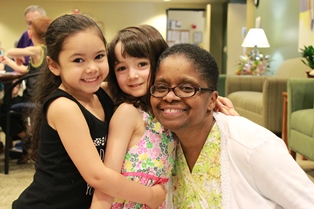
When opposite generations engage, people are able to have more enriching experiences of autonomy, tolerance, acceptance, patience, caring and nurturing.
All participants are given the opportunity to improve their cognitive ability. The activities help them work on social and emotional, language, literacy and behavioral skills.
More overtly, the program creates lasting friendship.
Their Center improves the quality of life for participants of all age by providing an opportunity for intergenerational engagement.
Learn more about our 2016 Programs of Distinction designees!
Subscribe to:
Posts (Atom)