Thursday, October 01, 2015

Sustainable development through building age inclusive urban environment - UN International Day of Older Persons

Statement from the United Nations

Click here to view enlarged photo.
According to the newly released 2015 Revision of World Population Prospects, there are 901 million people aged 60 or over in 2015, making up 12 percent of the global population. With a 3.26 percent growth rate each year, the number of older persons in the world is projected to be 1.4 billion by 2030 and 2.1 billion by 2050, and could rise to 3.2 billion in 2100.

Older persons are becoming an increasingly central demographic group in our world. To bring more attention to older persons, the United Nations is celebrating the 25th anniversary of the International Day of Older Persons (IDOP) on 1 October with the theme “sustainability and age inclusiveness in the urban environment”.

Events worldwide to celebrate older persons

Events marking the IDOP are scheduled around the world on 15 October, including a panel discussion in New York under the theme “Key components for age inclusiveness in urban environments”, a fundraising luncheon “Changing how we view older persons”, and another in Geneva, Switzerland titled “How to get to 100 and enjoy it!”.

“The steady increase in human longevity represents one of the greatest transformations and challenges of our time” Ban Ki-moon UN Secretary-General

The objectives of this year’s celebration are to draw attention to building age-inclusive cities in policy and technique scale, engaging older persons’ participation in city planning, building partnerships between government and the private sector to provide affordable and appropriate housing and transportation, as well as increasing inter-generational support for the social, economic and cultural arenas.

Keeping up with changing demographic trends

“The steady increase in human longevity represents one of the greatest transformations and challenges of our time. However, failure to keep pace with changing demographic trends will make it difficult to achieve a sustainable, secure and fulfilling future for people of all ages,” UN Secretary-General Ban Ki-moon stressed during the celebrations of the day last year. He pointed out that to realize sustainable development, older persons are a vital factor that should be taken into account.

The challenges caused by older persons residing in urban areas stand out, due to the fact that the move of older people to cities is occurring at higher frequency and on a larger scale. Six out of every 10 people in the world are expected to reside in urban areas by 2030. Consistent with urbanization trends, the number of older persons is increasing most rapidly in urban areas in developing countries.

This means that the number of people over 60 living in cities may grow to over 900 million by 2015, making up a quarter of the total urban population in developing countries. Based on these facts, the impact of the new urban environment on older persons, as well as the impact of older persons on the new urban environment, takes centre stage at this year’s event.

“In this effort, we must address shifting demographics, especially the needs and concerns of the world’s increasing number of older persons,” Ban Ki-moon said.

Strengthening human rights protection

In recent decades, the UN has made efforts within various areas affecting older persons’ lives, including strengthening their human rights protection, promoting a society for all, realizing longevity and reducing aging pressures occurring in social settings. This year, the commemoration seeks to demonstrate that an age-inclusive agenda is crucial for sustainable urban environments to promote equity, welfare and shared property for all.

Along with the IDOP celebration, the World Population Ageing Report 2015: Highlights is expected to be launched in October. The report will further illustrate the global trends in population ageing and include a series of indicators of the ageing process by development regions, major areas, regions and countries.

Monday, September 28, 2015

Silver Kite

EDITOR’S NOTE: Each week, we feature intergenerational program ideas that were tried and successful. This series is a tool to highlight various age-optimized programs and practices. The program descriptions are provided by representatives of the programs. Inclusion in this series does not imply Generations United’s endorsement or recommendation, but rather encourages ideas to inspire other programs.

This week's cool idea is Silver Kite, an intergenerational theatre company and arts program that’s connecting Washington state’s teens and older adults.

(Check our archives for parts 1-61.)

Silver Kite specializes in intergenerational drama curricula and program facilitation which unite generations by harnessing life stories as a basis for art-making, using creative play, storytelling, movement, and visual arts to share experiences, boost self-esteem, foster empathy and strengthen connections to self and community.

As an intergenerational theatre company, Silver Kite is a resident partner at the George Center for Community, where they offer family arts workshops, arts happy hours, storytelling open mic events, and classes for both teens and older adults.

Silver Kite also develops and facilitates programs in the community, partnering with K-12 schools, retirement communities, community centers, NGOs, and other organizations.

Their intergenerational theatre company is currently on tour with their original production of "A String."

Got something cool you tried that was successful? Why not tweet your cool intergenerational ideas to #cooligideas? You can also post them to our Intergenerational Connections Facebook Group. We want to highlight innovative age-optimized programs and practices through our blog, social media and weekly e-newsletter! Share the inspiration.

Tuesday, September 22, 2015

The Resounding Resiliency of Grandfamilies: Generations United's Statement

Approximately 2.7 million grandparents in the United States are responsible for raising their grandchildren. More than one in five of these grandparents live below the poverty line. Yet their circumstances are often overlooked when trying to strengthen the financial lives of families in lower-income communities.

Despite these hardships, grandfamily households are a better alternative to placing children in non-relative care. Children raised in kinship care, or what are commonly referred to as grandfamilies, fare better than those placed in the care of non-relatives. They are more likely to report feeling loved, achieve stability, stay connected to their brothers and sisters and understand their roots and culture. They are also more likely to have a couch to crash on when they’re too old to stay in the foster care system.

And even though these grandparent caregivers are skilled money managers, they just don’t have enough to stretch when they take on raising their grandchildren.

We partnered with CFED and Citi Community Development to get a better understanding of grandfamilies, their financial lives and how the available resources can better serve them. The findings are included in our report, The Resounding Resilience of Grandfamilies: Financial Stories from Older Relatives Care for Children in Lower-Income Communities.

The report, based on interviews from 20 grandparent caregivers in Chicago and Trenton, NJ, includes stories of sacrifice. For many caregivers, sacrificing for the children meant giving up a life they envisioned. For others, these sacrifices meant giving up on thinking about the future (retirement, etc.).

These caregivers keep families together and save taxpayers $4 billion a year by keeping their grandchildren out of the foster care system.

Through our National Center on Grandfamilies, we work to enact policies and promote programs, like kinship navigators and respite care, which help grandfamilies address challenges. Research shows that programs like these can reduce costs and increase permanency, while resulting in fewer days in child welfare custody and lower rates of foster care reentry.

The Resounding Resiliency of Grandfamilies also highlights opportunities to help improve the financial situation of grandfamilies – from empowering caregivers to reach their financial goals, to seeking ways to build the capacities of caregivers’ social and family networks to financially support grandfamilies, to continuing to learn more about the financial lives of grandfamilies.

To learn more about the financial lives of the 2.7 million grandfamily caregivers in America, download The Resounding Resilience of Grandfamilies. To contribute to our knowledge about grandfamilies, share a story with us about a grandfamily in your community.

Monday, September 21, 2015

The Human Services Academy

EDITOR’S NOTE: Each week, we feature intergenerational program ideas that were tried and successful. This series is a tool to highlight various age-optimized programs and practices. The program descriptions are provided by representatives of the programs. Inclusion in this series does not imply Generations United’s endorsement or recommendation, but rather encourages ideas to inspire other programs.

This week’s cool idea is the Human Services Academy, the first intergenerational career-based program in Wisconsin, annually enrolling over one-hundred students.

(Check our archives for parts 1-60.)

Human Services Academy is unique in its opportunities for student involvement in the daily activities of community non-profit agencies.

The mission of the Academy is to create a lasting bond between generations while providing an education to youth in a quality intergenerational learning environment.

This hands-on classroom is located in a building shared with Child Care Centers of Marshfield-Tiny Tiger and Companion Day Services.

In the Marshfield Human Services Academy, education is a shared responsibility among students, teachers, parents, and the community.

Alliances have been created with individuals and agencies in our community using the talents, resources and expertise of many to create rigorous and relevant learning experiences for students.

Got something cool you tried that was successful? Why not tweet your cool intergenerational ideas to #cooligideas? You can also post them to our Intergenerational Connections Facebook Group. We want to highlight innovative age-optimized programs and practices through our blog, social media and weekly e-newsletter! Share the inspiration.

Monday, September 14, 2015

The Intergenerational Outreach Choir

EDITOR’S NOTE: Each week, we feature intergenerational program ideas that were tried and successful. This series is a tool to highlight various age-optimized programs and practices. The program descriptions are provided by representatives of the programs. Inclusion in this series does not imply Generations United’s endorsement or recommendation, but rather encourages ideas to inspire other programs.

This week’s cool idea is the Intergenerational Outreach Choir (IOCC), which is based in several locations in Oregon. IOCC's mission is connecting generations through song.

(Check our archives for parts 1-59.)

They strive to bring together intergenerational members of community through the formation of community choirs, to empower people to develop and value their own voices, to foster mutual understanding and respect among people of all ages and backgrounds, and to be a service to the public through the sharing of music and song.

Got something cool you tried that was successful? Why not tweet your cool intergenerational ideas to #cooligideas? You can also post them to our Intergenerational Connections Facebook Group. We want to highlight innovative age-optimized programs and practices through our blog, social media and weekly e-newsletter! Share the inspiration.

Friday, September 11, 2015

A Grandparents Day Tribute: Paul and Muriel Horansky

written by Emily Duda

“Are we there yet?” We’d start whining as soon as our loaded minivan started the mountainous incline to Grammy and Grandpa’s house. Our family’s 10-hour drive from Virginia to New Hampshire was usually bearable until those last thirty minutes of anticipation.

When we’d finally pull into the driveway, the car was hardly in park before my siblings and I were barreling to the front door. Those of us still tiny enough would line up and beg for our turn to be lifted into Grandpa’s arms. “Up the stairs… went the bears… up, up, up!” he’d sing as he carried us around the house, one-by-one, exploring every room. Being one of 24 cousins, what a treat it was to have my special time with Grandpa- just us.

On summer trips, we’d spend our days at Lake Winnipesauke. Grammy would pack lunch and Grandpa would meet us in the afternoon, always stubbornly refusing to take off his sneakers in the sand. On other days, we’d join Grandpa in his element at the blueberry farm. The owners knew him by name and were excited to see which of us kiddos he had in tow. Our pickings would go straight back to Grammy, patiently waiting in the kitchen to whip up her famous blueberry buckle. I would watch in awe as she’d resist the urge to taste the sweet batter, scraping the bowl to the very last drop. When it was finally time to eat dessert, we’d always make them retell the story about the time our aunt had a blueberry stuck in her nose, laughing until milk came out of ours.

In the winter, the snowcapped mountains were Grandpa’s playground- the reason retirement lured them to New Hampshire in the first place. We’d join him on the slopes and watch as he whizzed by skiers half his age. Grammy would wait for us down at the lodge, eager to press her warm rosy cheeks against our cold ones as soon as we were ready to hang up our hats for the day. When we made it back to their house, we could count on a cozy night’s sleep, followed by a big bowl of Fruity Pebbles in the morning. The sweet cereal was Grandpa’s guilty pleasure- and his secret to aging in style. “Chin over your dish”, he’d warn as I’d scarf down a second bowl.

Nearly twenty years later, I can still smell, and hear, and taste those childhood trips to New Hampshire. Grammy and Grandpa have since let go of mountain life to move back to Virginia, giving trips to their house new meaning. Our action-packed visits have turned to more peaceful quality time; soaking up stories from their past and relishing in the legacy they’ve created with our growing family. At age 27, it’s hard to imagine my 90-year-old self; but if I’m lucky, I will be embracing elderhood with the wisdom, persistence, and enthusiasm of my grandparents. Until then, please pass the Fruity Pebbles.

Monday, August 31, 2015

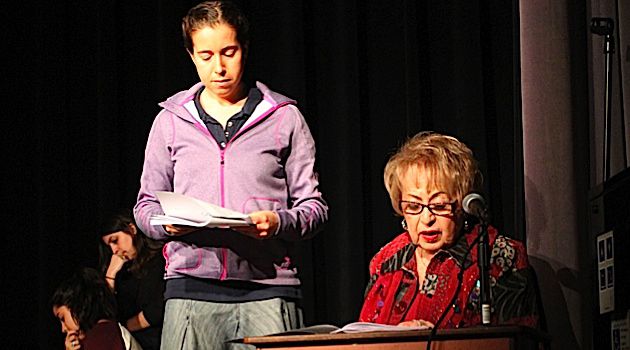
Witness Theater

PHOTO: Witness Theater
EDITOR’S NOTE: Each week, we feature intergenerational program ideas that were tried and successful. This series is a tool to highlight various age-optimized programs and practices. The program descriptions are provided by representatives of the programs. Inclusion in this series does not imply Generations United’s endorsement or recommendation, but rather encourages ideas to inspire other programs.

This week’s cool idea is Witness Theater, a unique intergenerational program that brings Holocaust survivors and teenagers together under the guidance of a drama therapist to develop a theatrical presentation of the survivors' Holocaust experiences.

(Check our archives for parts 1-58.)

Witness Theater is among the New York-area Jewish charities to which the Jewish Communal Fund (JCF) recently awarded a grant.

PHOTO: Stav Ziv
The $100,000 grant will bring this moving and powerful educational experience to the Ramaz School on the Upper East Side of Manhattan, as well as cover the cost of a program director to oversee Witness Theater at a total of four schools.

Got something cool you tried that was successful? Why not tweet your cool intergenerational ideas to #cooligideas? You can also post them to our Intergenerational Connections Facebook Group. We want to highlight innovative age-optimized programs and practices through our blog, social media and weekly e-newsletter! Share the inspiration.

Wednesday, August 26, 2015

The Intergenerational Pen-Pal Program

EDITOR’S NOTE: Each week, we feature intergenerational program ideas that were tried and successful. This series is a tool to highlight various age-optimized programs and practices. The program descriptions are provided by representatives of the programs. Inclusion in this series does not imply Generations United’s endorsement or recommendation, but rather encourages ideas to inspire other programs.

This week’s cool idea is the Intergenerational Pen-Pal Program in Ohio, which fosters friendships between younger and older generations by pairing a class of third graders with attendees at a local senior center.

(Check our archives for parts 1-57.)

The students from Union Elementary School learned how to write letters and the value of friendships with older adults, while allowing older adults to bond with youth and keep their minds active.

In their letters, the third graders asked Fairhaven residents questions and shared the details of their lives: school field trips, visits to relatives, soccer games.

Many of the pen-pals developed friendships that outlasted the school year and a few still keep in touch.

Got something cool you tried that was successful? Why not tweet your cool intergenerational ideas to #cooligideas? You can also post them to our Intergenerational Connections Facebook Group. We want to highlight innovative age-optimized programs and practices through our blog, social media and weekly e-newsletter! Share the inspiration.

Monday, August 17, 2015

Manor of the Plains

EDITOR’S NOTE: Each week, we feature intergenerational program ideas that were tried and successful. This series is a tool to highlight various age-optimized programs and practices. The program descriptions are provided by representatives of the programs. Inclusion in this series does not imply Generations United’s endorsement or recommendation, but rather encourages ideas to inspire other programs.

This week’s cool idea is Manor of the Plains, an adult living facility based in Kansas where residents volunteer to be matched with a student from an immigrant family, and the group meets monthly throughout the school year.

(Check our archives for parts 1-56.)

Many of the children don’t have the opportunity to see their grandparents frequently, and this program gives them an opportunity to interact with a caring older adult.

The resident volunteers also help the children learn more about Midwestern culture as they share how times have changed since they were kids.

The year ends with a joint quilting project with the students making quilt squares depicting what they’d like to do when they grow up.

Got something cool you tried that was successful? Why not tweet your cool intergenerational ideas to #cooligideas? You can also post them to our Intergenerational Connections Facebook Group. We want to highlight innovative age-optimized programs and practices through our blog, social media and weekly e-newsletter! Share the inspiration.

Tuesday, August 11, 2015

Grand Camps and Grandparents and Grandchildren's Camp

Haw River State Park
EDITOR’S NOTE: Each week, we feature intergenerational program ideas that were tried and successful. This series is a tool to highlight various age-optimized programs and practices. The program descriptions are provided by representatives of the programs. Inclusion in this series does not imply Generations United’s endorsement or recommendation, but rather encourages ideas to inspire other programs.

This week’s cool ideas are Grand Camps and Grandparents and Grandchildren’s Camp. Both camps engage all ages in amazing outdoor adventures.

(Check our archives for parts 1-55.)

The Grand Camps is a program of the Haw River State Park in Raleigh, North Carolina.

The Grand Camps are for grandparents who would like to come to summer camp with a grandchild or two, or for children who would like to bring their grandparents to camp.

"The Illusion of Roughing It" at Grandparents and
Grandchildren's Camp - Great Camp Sagamore.
The Summit Environmental Education Staff of Haw River lead participants in many amazing park adventures.

Activities are based on weekly themes.

Grand Camps kicks off in Week 3 (August 5-7) of the Haw River Park summer program and concludes in Week 4 (August 12-14).

In Raquette Lake, New York, the Grandparents' and Grandchildren’s' Camp is a program of Great Camp Sagamore.

This authentic 1890s, 27-building National Historic Landmark has, for more than two decades, offered historically-based programs through day visits and multi-day/night residencies.

Their Grandparents’ and Grandchildren’s’ Camp sessions in July and August introduce an intergenerational curriculum using outdoor, historical, crafting and musical activities.

One of the most popular of these programs is “The Illusion of Roughing It,” a basic great camps course that teaches Gilded Age history and uses both Sagamore, the Vanderbilt Great Camp, and neighboring Great Camp Uncas that once belonged to J. P. Morgan.

All residential courses include room and board, the daily history tour, time for relaxation and reflection, and the opportunity to experience the same woods and waters that Durant did in 1897.

Got something cool you tried that was successful? Why not tweet your cool intergenerational ideas to #cooligideas? You can also post them to our Intergenerational Connections Facebook Group. We want to highlight innovative age-optimized programs and practices through our blog, social media and weekly e-newsletter! Share the inspiration.

Monday, August 03, 2015

Computer Buddies Program

EDITOR’S NOTE: Each week, we feature intergenerational program ideas that were tried and successful. This series is a tool to highlight various age-optimized programs and practices. The program descriptions are provided by representatives of the programs. Inclusion in this series does not imply Generations United’s endorsement or recommendation, but rather encourages ideas to inspire other programs.

This week’s cool idea is Computer Buddies Program, a pen pal program between youth and older adults in Wisconsin.

(Check our archives for parts 1-54.)

The Retired and Senior Volunteer Program's (RSVP) volunteers in Dane County are matched with a student and correspond in pen pal fashion weekly or biweekly via electronic transmission – blog or e-mail.

The program provides the opportunity for students to practice their writing and computer keyboard skills while fostering a positive relationship between the generations.

Got something cool you tried that was successful? Why not tweet your cool intergenerational ideas to #cooligideas? You can also post them to our Intergenerational Connections Facebook Group. We want to highlight innovative age-optimized programs and practices through our blog, social media and weekly e-newsletter! Share the inspiration.

Tuesday, July 28, 2015

Grandparent/GrandChild Camp


EDITOR’S NOTE: Each week, we feature intergenerational program ideas that were tried and successful. This series is a tool to highlight various age-optimized programs and practices. The program descriptions are provided by representatives of the programs. Inclusion in this series does not imply Generations United’s endorsement or recommendation, but rather encourages ideas to inspire other programs.

This week’s cool idea is Grandparent/Grandchild Camp at Camp Phillip in Wisconsin, a half week day camp for grades K and up.

(Check our archives for parts 1-53.)

Adults and children camp in the campground with their equipment.

Grandparents and grandchildren join the staff who provide programs that encourage fellowship and interaction.

Two lunches are included for the children and grandparents.

There are optional activities for adults during the day.

Got something cool you tried that was successful? Why not tweet your cool intergenerational ideas to #cooligideas? You can also post them to our Intergenerational Connections Facebook Group. We want to highlight innovative age-optimized programs and practices through our blog, social media and weekly e-newsletter! Share the inspiration.

Wednesday, July 22, 2015

Submission Guidelines for Bookend Blogs

The Bookend Blog series got its name from our contributing writers, youth and older adults, both of whom we refer to as the "bookends" that hold our civil society together. 

Bookend bloggers comment on current events and offer generational perspectives. 

Interested in submitting a Bookend Blog for the Together Blog

We’re always looking for quality posts on intergenerational issues and would be happy to consider yours. Check out the guidelines below and contact Alan King if you have any questions.

Bookend Pairs
Preferably, we would like those interested in writing a Bookend Blog to already have a partner from another generation selected. 

When you contact Alan, please let us know your topic and why it's intergenerational. 

Post Title, Content, & Word Count
Your content must be original and cannot be plagiarized. Articles must have a title and should be 500-700 words in length.  If your article is more than 600 words, we may choose to shorten your article or create a series (i.e., multi-part post).

Bold Important Points: Online readers tend to skim through pieces, so web writers often put key points in bold type. This will help readers to easily identify your main points.

Contains links to other sites: Take advantage of the ability to link to other sites, documents, resources, etc. Drive traffic to other sources for more information on your blogging topic.

Include a picture when possible (and remember to give credit to the source)

Please submit the following information for the About the Author section:

1. Brief bio, including your title (e.g., Professional Organizer, Engineer, Blogger, Photographer, Speaker, etc.)
2. Links (e.g., website, blog, Twitter, Facebook, LinkedIn, etc.)
3. Other contact info (e.g., e-mail address or phone number)

Posting Date
Articles are scheduled based on openings on the Together Blog editorial calendar. Dates are subject to change. You can submit a post at any time and, if we decide to use it, we’ll let you know when it will be published. Note: we’ll tell you if we are unable to use your article.

Disclaimer
*Articles will be edited for grammar and clarity. We reserve the right to make changes to the content and title.” That said, your message will be conveyed as you intend it. It is important to us that your voice comes through your post (and not that of the blog owner).

Helpful tips on the tone of your blog post
· Be casual. Most blog readers don't generally respond to a formal, authoritative tone. Try to write in a tone that's natural, casual, and almost conversational. Imagine that you're writing for a guy who's sitting in his cubicle during his lunch break.

· Remember, it's a conversation. Keep the discussion open. You don't have to tie up all the loose ends and answer all questions by the end of a blog post. In fact, it's better to leave some questions asked and unanswered. Treat the first few paragraphs of your post as an invitation to hear your unique view; use the last couple of paragraphs to invite them into the conversation.

· Encourage comments from readers. Ask questions at the end of your post, when possible.

Monday, July 20, 2015

Silver Tunes for Golden Memories

EDITOR’S NOTE: Each week, we feature intergenerational program ideas that were tried and successful. This series is a tool to highlight various age-optimized programs and practices. The program descriptions are provided by representatives of the programs. Inclusion in this series does not imply Generations United’s endorsement or recommendation, but rather encourages ideas to inspire other programs.

This week’s cool idea is Silver Tunes for Golden Memories, a community service project where twin brothers, Daniel and Gabriel Vasquez, visit different adult day facilities, nursing homes and assisted living centers to play traditional music for older adults.

(Check our archives for parts 1-52.)

The performance includes traditional Latin songs, such as Siboney and Quizas Quizas Quizas, as well as traditional American songs, such as Frank Sinatra’s My Way.

These songs get older adults singing and dancing as they remember their youth.

It's musical therapy, stimulating elders’ minds and their memories. Some tell Daniel and Gabriel they haven't heard the song in over fifty years, and yet they still remember all the words.

They always ask the musicians to return soon, and their caretakers report that even after the performance the elders are more energized and joyful than usual.

The young musicians have visited over 50 centers with over 60 performances!

With Silver Tunes for Golden Memories, the Vasquez brothers often invite guest musicians to join them on stage.

Some concerts also include hands-on activities with older adults.

Got something cool you tried that was successful? Why not tweet your cool intergenerational ideas to #cooligideas? You can also post them to our Intergenerational Connections Facebook Group. We want to highlight innovative age-optimized programs and practices through our blog, social media and weekly e-newsletter! Share the inspiration.

TimeSlips Creative Storytelling – Creative Trusts - 2015 Programs of Distinction Designee

This program recruits, trains and coordinates undergraduate students to facilitate creative storytelling sessions with elders with cognitive disabilities in care communities affiliated with the Creative Trusts in Milwaukee.

Students commit to a semester of storytelling, but commonly continue for the full year. 

At year’s end, the stories are shared publicly to inspire others to use creative engagement to nurture relationships with people with cognitive disabilities. 

TimeSlips is used in service learning around the country, but the Creative Trusts offers a stable, shared governance of the program that is a national model for collaboration in this important area of need.

Learn about our other 2015 Programs of Distinction designees!

The Intergenerational School - 2015 Programs of Distinction Designee

The Intergenerational School (TIS) is a successful community public school located in Cleveland, Ohio. 

In this elementary school adults of all ages participate as co-learners in supporting life-long learning and spirited citizenship. 

The recipient of many local, national and international awards the model is now being replicated in Cleveland (Near West and Lakeshore Intergenerational Schools) and elsewhere. 

Studies demonstrate the value of the model for both children and elders, including those with cognitive challenges like dementia. 

The school has developed innovative programs in literacy, environment, health, information technology, and the arts. The school fosters collective wisdom in service of a sustainable future.

Learn about our other 2015 Programs of Distinction designees!

Monday, July 13, 2015

Awakening Minds Art's Intergenerational Painting Programs

EDITOR’S NOTE: Each week, we feature intergenerational program ideas that were tried and successful. This series is a tool to highlight various age-optimized programs and practices. The program descriptions are provided by representatives of the programs. Inclusion in this series does not imply Generations United’s endorsement or recommendation, but rather encourages ideas to inspire other programs.

This week’s cool idea is Awakening Minds Art (AMA)’s Intergenerational Painting Programs, which gives participants across the lifespan the opportunity to come together through art.

(Check our archives for parts 1-51.)

Awakening Minds Art in Findlay, Ohio, originally was a part of the nationwide organization called Art Without Boundaries.

In 2010, AMA broke away from Art Without Boundaries and began as a traveling program working only in student's homes, schools and nursing homes.

Through their Intergenerational Painting Programs, AMA pairs children with older adults who interact during the group painting class.

Programs are held at nursing homes and senior centers in Hancock County and Allen County.

Facilities are responsible for scheduling the class for their residents/ members, while the children/ students are responsible for registering via the AMA Studio or website.

Got something cool you tried that was successful? Why not tweet your cool intergenerational ideas to #cooligideas? You can also post them to our Intergenerational Connections Facebook Group. We want to highlight innovative age-optimized programs and practices through our blog, social media and weekly e-newsletter! Share the inspiration.

PSS/WSF Grandparent Family Apartments - 2015 Programs of D

Presbyterian Senior Services has been a pioneering leader of kinship services since the early 1990’s when it held support groups at its senior centers for grandparents raising grandchildren. 

Its innovative PSS/WSF Grandparent Family Apartments, one of the first residences for kinship families, opened in 2005. 

With the Grandparent Family Apartments as its hub, PSS now provides kinship caregiver services in three boroughs of NYC. 

Their success is because PSS has programs that support both the grandparents and the grandchildren: from “Parenting a Second Time Around” training for grandparents to the Young Adult Success Program (YASP) for kinship youth.

Learn about our other 2015 Programs of Distinction designees!

Opening Minds through Art (OMA) - 2015 Programs of Distinction Designee


Opening Minds through Art (OMA) is an intergenerational art program for people with dementia.

It is grounded in person-centered ethics and founded on the fact that people with dementia are capable of expressing themselves creatively.

There is a growing body of empirical evidence that creative expression improves their physical and psychological well-being.

The mission of OMA is to build bridges across age and cognitive barriers through art.

The program is implemented in group sessions: Up to 12 people with dementia with the assistance of 12 trained volunteers working on a one-to-one basis. 

The art-making sessions culminate in a gallery exhibition celebrating the artists’ accomplishments while educating the public about the creative capacities of people with dementia.

Learn about our other 2015 Programs of Distinction designees!

Tuesday, July 07, 2015

July Advocate of Distinction - Seniors4Kids

Adrian Charniak with her grandson, Joey, 16. Adrian became
the legal guardian of her grandson, Joe, prior to her son's death
six years ago. She later sought help from the Center for Law
and Social Work, which provides legal and social services.
EDITOR'S NOTE: Advocate of Distinction is a feature in our Seniors4Kids Monthly e-Alerts, honoring a #FearlessElder advocating on behalf of children and families. You can see past Advocates of Distinction by visiting our e-Alerts archive

Our July Advocate of Distinction, Adrian Mary Charniak, partnered with the Vision and Mission of Trinity Community Church, UCC in Berwyn, Illinois to create a new ministry - Gift of Hope, Grandparents and Others Raising America’s Children.

Since creation in 2009, Gift of Hope has been active on state (see: Adrian's Help List for Illinois grandparents and other elders raising children) and national levels fighting for the rights of grandparents raising grandchildren.

Gift of Hope also provides emotional, physical, and spiritual support needed to face the overwhelming demands of raising grandchildren while striving to break the isolation older adults experience the second time around with raising grandchildren.

The Chicago Daily Law Bulletin April 2015 edition featured Adrian and her grandson, Joe, in a story known too well by many grandparents and other relatives – legal, financial, emotional challenges at extreme levels – who must step up.

Adrian and her husband, Ron, won the battle for their grandson, Joey, and enlarged their mission to help others.

Adrian’s service extends beyond Gift of Hope to the National Committee of Grandparents for Children’s Rights as a Board Member for the State of Illinois; the Illinois Taskforce for Grandparent’s Rights; the Grandparents Empowerment Group at Rush Hospital, Oak Park, Illinois and Rush Medical Center, Chicago, Illinois as Support Group Leader; the Help Desk with the Cook County Guardianship Assistance Desk For Minors in the State of Illinois.

Adrian has received many awards and accolades including the top volunteer service award from President Barack Obama.

Monday, July 06, 2015

Big Brothers Big Sisters of Rock, Walworth and Jefferson Counties, Inc.

EDITOR’S NOTE: Each week, we feature intergenerational program ideas that were tried and successful. This series is a tool to highlight various age-optimized programs and practices. The program descriptions are provided by representatives of the programs. Inclusion in this series does not imply Generations United’s endorsement or recommendation, but rather encourages ideas to inspire other programs.

This week’s cool idea is Big Brothers Big Sisters of Rock, Walworth and Jefferson Counties, Inc., which matches youth between the ages of 6 and 14 with Seniors living in an Independent Living Senior Community.

(Check our archives for parts 1-50.)

The youth and older adults meet once a week for a couple of hours each to share experiences and learn new things.

This program is part of the overall youth mentoring programs of Big Brothers Big Sisters and helps multiple generations with the match.

Statistics show that children spending a year in the program show stronger positive decision making skills, strong resistance to the use of drugs and alcohol, more respect for peers and those in authority, better grades and are more likely to take part in extracurricular activities.

At the same time, the senior population is seeing strong positive effects.

They report being more active and involved, building a sense of worth and their overall outlook is strong and positive.

Through such programs we hope to work together to build strength in our communities while we share our time and talents to help others.

Got something cool you tried that was successful? Why not tweet your cool intergenerational ideas to #cooligideas? You can also post them to our Intergenerational Connections Facebook Group. We want to highlight innovative age-optimized programs and practices through our blog, social media and weekly e-newsletter! Share the inspiration.

The Elder Service Partner Program - 2015 Program of Distinction Designee

The Elder Service Partner Program is an intergenerational service-learning experience for students enrolled in GERO 232 Sociology of Aging at Messiah College, a private college in Pennsylvania.

Students are paired with an Elder Service Partner (ESP) in completing two types of service.

First, students join their ESP in fulfilling obligations their ESPs have already made to their communities at food pantries, service organizations, etc.

Second, students also conduct interviews with their ESPs in order to create a chapter of a life story, which is presented to their ESPs at our celebratory reception at the end of the semester.

Learn about our other 2015 Programs of Distinction designees!

Bridge Meadows - 2015 Programs of Distinction Designee

Bridge Meadows is an intentional intergenerational housing community in North Portland. 

Serving foster youth, adoptive parents, and low­‐income elders, Bridge Meadows cultivates permanence and family resilience through integrated onsite support services and therapeutic interventions. 

Children move from the instability of foster care placements to permanent homes and families. Adoptive families receive essential guidance and social support. 

Low‐income elders combat the deleterious health effects of social isolation by volunteering 100 hours/quarter in the community. 

Together, our three generations of residents transform individual vulnerability into collective strength, creating a whole that is greater than the sum of its parts.

Monday, June 29, 2015

Volunteers for Community Impact

EDITOR’S NOTE: Each week, we feature intergenerational program ideas that were tried and successful. This series is a tool to highlight various age-optimized programs and practices. The program descriptions are provided by representatives of the programs. Inclusion in this series does not imply Generations United’s endorsement or recommendation, but rather encourages ideas to inspire other programs.

This week’s cool idea is Volunteers for Community Impact, which sponsors the Foster Grandparent Program, RSVP, and VCI Cyber-Seniors throughout Central Florida, allowing adults ages 55 and older to connect with young people through a variety of sources.

(Check our archives for parts 1-49.)

The Foster Grandparent Program and RSVP create the opportunity for adults ages 55 and over to volunteer as little as 30 minutes up to 25 hours every week with special needs and at risk youth helping them learn to read, and stay on target for graduation.

VCI Cyber-Seniors connects adults with a young mentor who teaches them how to reconnect to their friends, family, and community through technology.

Be a Hero... Volunteer!

Got something cool you tried that was successful? Why not tweet your cool intergenerational ideas to #cooligideas? You can also post them to our Intergenerational Connections Facebook Group. We want to highlight innovative age-optimized programs and practices through our blog, social media and weekly e-newsletter! Share the inspiration.

Tuesday, June 23, 2015

The South Brunswick Senior Center

EDITOR’S NOTE: Each week, we feature intergenerational program ideas that were tried and successful. This series is a tool to highlight various age-optimized programs and practices. The program descriptions are provided by representatives of the programs. Inclusion in this series does not imply Generations United’s endorsement or recommendation, but rather encourages ideas to inspire other programs.

This week’s cool idea is the Senior Center in South Brunswick, NJ, which partners with the local school district to conduct a number of intergenerational programs.

(Check our archives for parts 1-48.)

A highlight of the South Brunswick Senior Center’s partnership with the local school district is the Living Legacies project, an annual event that sees high schoolers and older adults collaborating for an original theatre performance.

Each year, the theme is different. Some past themes include veteran stories, immigration, and local history. The school gathers students and the senior center and their volunteer partner organizations to identify older adults within the township to participate.

They use the theme as the starting point for conversations and begin to meet regularly. Wonderful conversations are held, new things are learned, perspectives are shared, and a bond begins to form.

Older adults are interviewed by the high school students during their English classes.

The students then translate what they learned from all these interviews into monologues, turning them into a theatre performance piece presented at the senior center.

A reception follows, so seniors can then mingle with the students and discuss the show, which continues to foster the learning experience.

Got something cool you tried that was successful? Why not tweet your cool intergenerational ideas to #cooligideas? You can also post them to our Intergenerational Connections Facebook Group. We want to highlight innovative age-optimized programs and practices through our blog, social media and weekly e-newsletter! Share the inspiration.

Monday, June 15, 2015

Red Hook Community Farm


EDITOR’S NOTE: Each week, we feature intergenerational program ideas that were tried and successful. This series is a tool to highlight various age-optimized programs and practices. The program descriptions are provided by representatives of the programs. Inclusion in this series does not imply Generations United’s endorsement or recommendation, but rather encourages ideas to inspire other programs.

This week’s cool idea is Red Hook Community Farm, a vibrant community resource where young and old work, study and grow together as they sow, nurture and harvest plants on a 2.75 acre urban farm.

(Check our archives for parts 1-47.)

Neighborhood leaders and local youth, along with regional institutions, created the Farm to address food insecurity, unemployment and the alienation of youth from the Red Hook community.

What was once a dilapidated playground is now an intergenerational center for urban agriculture that serves as an experiential educational environment for youth, adults and elders.

Red Hook Community Farm provides sustenance to residents, creates meaningful work for neighborhood teens, generates thousands of dollars of economic activity and improves community food security.

Got something cool you tried that was successful? Why not tweet your cool intergenerational ideas to #cooligideas? You can also post them to our Intergenerational Connections Facebook Group. We want to highlight innovative age-optimized programs and practices through our blog, social media and weekly e-newsletter! Share the inspiration.

Tuesday, June 09, 2015

Meet Bonnie Her - Generations United Summer Intern

I’ve witnessed firsthand the injustices toward older adults.

It wasn’t until I took an intergenerational course that I realized the linchpin for that maltreatment and neglect is the lack of understanding that young and old are interdependent on one another.

Prior to my new understanding, I began my college career hoping to one day become a nurse.

Now, I’m a junior at San Diego State University, pursuing a Bachelors of Arts in Gerontology with an interest in intergenerational issues.

I graduate next Spring.

As someone who likes snorkeling, rock climbing and backpacking through Arizona’s canyons, I’m always looking for new experiences.

And this summer is no different with me making D.C. home for two months.

I’m thrilled to be with Generations United researching intergenerational programs for our directory, compiling information and materials for the Grandparents Raising Grandchildren bibliography, and assisting in the research for the next State of Grandfamiles report.

This is a great opportunity for me to learn and contribute to Generations United’s successes.

Monday, June 08, 2015

The Amazing Worthington City Band


EDITOR’S NOTE: Each week, we feature intergenerational program ideas that were tried and successful. This series is a tool to highlight various age-optimized programs and practices. The program descriptions are provided by representatives of the programs. Inclusion in this series does not imply Generations United’s endorsement or recommendation, but rather encourages ideas to inspire other programs.

This week’s cool idea is The Amazing Worthington City Band, a Minnesota-based intergenerational band whose membership ranges in age from 8th grade to older adults, or “the most wisdomed tune makers”.

(Check our archives for parts 1-46.)

Young and old practice at the Worthington Senior High School and then share their concert tunes at 7:30, Wednesday nights at Chautauqua Park next to the beautiful Lake Okabena.

City Band Concerts begin their summer kick-off on May 28th, Memorial Day at 11:00 in the park supporting the American Legion and VFW’s 'Salute to our Servicemen and Women'.

About 200 community members come out each Wednesday to celebrate music and tap their toes with the Amazing Worthington City Band.

A ten minute intermission features local talent and the kiddies get to take part in a special march topped off with a treat.

The billowing breeze off the lake, the soaking sunshine throughout the shadows, and the happy giggles coming from the squeaking swings all add to the great time all ages have on Wednesday nights in Worthington down by the lake.

Got something cool you tried that was successful? Why not tweet your cool intergenerational ideas to #cooligideas? You can also post them to our Intergenerational Connections Facebook Group. We want to highlight innovative age-optimized programs and practices through our blog, social media and weekly e-newsletter! Share the inspiration.

Monday, June 01, 2015

Penacook Community Center's Buddy Bingo and Walking School Bus

PCC's older adults put on their sneakers and join the early morning “Walking
School Bus” from the community center to Penacook Elementary School.
EDITOR’S NOTE: Each week, we feature intergenerational program ideas that were tried and successful. This series is a tool to highlight various age-optimized programs and practices. The program descriptions are provided by representatives of the programs. Inclusion in this series does not imply Generations United’s endorsement or recommendation, but rather encourages ideas to inspire other programs.

This week’s cool ideas are the New Hampshire-based Penacook Community Center (PCC)’s Buddy Bingo and Walking School Bus programs, both of which allow older adults to pass on the importance of safety, while teaching children and youth to read and learn numbers.

(Check our archives for parts 1-45.)

In Buddy Bingo, older adult program members and preschool program children play intergenerational bingo, which helps children identify, read, and learn numbers and helps older adults keep their brains stimulated and motor skills challenged.

Through a partnership with the Merrimack Valley School District Safe Routes to School organization, PCC launched their “Walking School Bus” program where staff and older adults escort the children from the community center to Penacook Elementary School.

All ages enjoy the laughs and conversations during the brisk early morning walks.

Got something cool you tried that was successful? Why not tweet your cool intergenerational ideas to #cooligideas? You can also post them to our Intergenerational Connections Facebook Group. We want to highlight innovative age-optimized programs and practices through our blog, social media and weekly e-newsletter! Share the inspiration.

Tuesday, May 26, 2015

The Next Chapter

Courtesy of Jewish Family and Children's
Services
EDITOR’S NOTE: Each week, we feature intergenerational program ideas that were tried and successful. This series is a tool to highlight various age-optimized programs and practices. The program descriptions are provided by representatives of the programs. Inclusion in this series does not imply Generations United’s endorsement or recommendation, but rather encourages ideas to inspire other programs.

This week’s cool idea is The Next Chapter, which enables high school youth to connect with and learn from Holocaust survivors.

(Check our archives for parts 1-44.)

The Next Chapter is a program of Jewish Family and Children's Services, one of the oldest and largest family service institutions in the United States, founded in 1850 by immigrant pioneers who arrived in California during the Gold Rush and created an extended family to care for each other.

Today, they continue to be that extended family, serving 78,000 people annually with the highest quality, research-based social services designed to strengthen individuals, strengthen families, and strengthen community.

As the problem-solving center for residents of San Francisco, Marin, Sonoma, Santa Clara, and San Mateo counties, the Jewish Family and Children’s Services is a lifeline for children, families, and older adults facing life transitions and personal crises.

By participating in The Next Chapter, students are awarded 40 hours of community service and create a special relationship with a local survivor.

At monthly meetings, students will learn how to:

1) Interview Holocaust survivors and document their oral histories in a written essay.

2) Study the history of the Holocaust and explore the current Jewish cultural renaissance in Poland.

3) Time commitment: Students will meet in one seminar a month from December through April, and connect with the survivor they have been matched with three times throughout the semester.

Got something cool you tried that was successful? Why not tweet your cool intergenerational ideas to #cooligideas? You can also post them to our Intergenerational Connections Facebook Group. We want to highlight innovative age-optimized programs and practices through our blog, social media and weekly e-newsletter! Share the inspiration.

Tuesday, May 12, 2015

Rainbow Intergenerational Child Day Care Program

EDITOR’S NOTE: Each week, we feature intergenerational program ideas that were tried and successful. This series is a tool to highlight various age-optimized programs and practices. The program descriptions are provided by representatives of the programs. Inclusion in this series does not imply Generations United’s endorsement or recommendation, but rather encourages ideas to inspire other programs.

This week’s cool idea is the Rainbow Intergenerational Child Day Care Program in Florida, an intergenerational child care program in which older adults from the Rafael Villaverde Adult Day Health Care Center are trained to obtain certification as child care workers.

(Check our archives for parts 1-44.)

At the Rainbow Intergenerational Child Day Care Program, children are cared for in a culturally appropriate center by a “family member.” The service is offered to working poor families.

By providing them with access to safe, quality day care services, children of low-income families are prepared to compete on an equal basis with other children of better economic means.

They also benefit from intergenerational exposure as they participate in shows or visit the Adult Day Care Center to play and carry out joint activities with Alzheimer’s patients.

Got something cool you tried that was successful? Why not tweet your cool intergenerational ideas to #cooligideas? You can also post them to our Intergenerational Connections Facebook Group. We want to highlight innovative age-optimized programs and practices through our blog, social media and weekly e-newsletter! Share the inspiration.

Monday, May 04, 2015

VISIONS Intergenerational Program

EDITOR’S NOTE: Each week, we feature intergenerational program ideas that were tried and successful. This series is a tool to highlight various age-optimized programs and practices. The program descriptions are provided by representatives of the programs. Inclusion in this series does not imply Generations United’s endorsement or recommendation, but rather encourages ideas to inspire other programs.

This week’s cool idea is VISIONS Intergenerational Program, a Generations United Program of Distinction that recruits, trains and employs high school students in New York City to assist blind seniors in their homes, and at Selis Manor.

(Check our archives for parts 1-43.)

VISIONS Intergenerational Program operates under VISIONS Center on Aging. The youth provide escort and assistance with reading, shopping, and technology.

VISONS Caregiver project supports family, partners, and friends who help a senior with vision loss.

Overnight respite at VCB and day respite at Selis Manor are provided.

Got something cool you tried that was successful? Why not tweet your cool intergenerational ideas to #cooligideas? You can also post them to our Intergenerational Connections Facebook Group. We want to highlight innovative age-optimized programs and practices through our blog, social media and weekly e-newsletter! Share the inspiration.

Tuesday, April 28, 2015

Cross Cultural Community Center in Chicago

EDITOR’S NOTE: Each week, we feature intergenerational program ideas that were tried and successful. This series is a tool to highlight various age-optimized programs and practices. The program descriptions are provided by representatives of the programs. Inclusion in this series does not imply Generations United’s endorsement or recommendation, but rather encourages ideas to inspire other programs.

This week’s cool idea is the Cross Cultural Community Center in Chicago, where college students teach cooking classes for older adults.

(Check our archives for parts 1-42.)

The classes focus on youth educating older adults about American foods – tips on cooking, nutrition and health.

The goal is to help the older adults become more independent by learning how to cook their own healthy meals, while strengthening intergenerational connections and understanding.

Some of their other programs include youth and older adults gardening together, helping Korean-American older adults translate English, and providing grandparents raising grandkids with information and resources.

Got something cool you tried that was successful? Why not tweet your cool intergenerational ideas to #cooligideas? You can also post them to our Intergenerational Connections Facebook Group. We want to highlight innovative age-optimized programs and practices through our blog, social media and weekly e-newsletter! Share the inspiration.

Tuesday, April 21, 2015

Students Inter-generational Art to Protect Nature

EDITOR’S NOTE: Each week, we feature intergenerational program ideas that were tried and successful. This series is a tool to highlight various age-optimized programs and practices. The program descriptions are provided by representatives of the programs. Inclusion in this series does not imply Generations United’s endorsement or recommendation, but rather encourages ideas to inspire other programs.

This week’s cool idea is the “Students Inter-generational Art to Protect Nature,” the result of more than 60 pieces of art from Sauk Trail fourth-grade students and older adults in Middleton, Wisconsin, who are concerned about the importance of preserving local nature.

(Check our archives for parts 1-41.)

The program began by observing and discussing nature, wildlife, and habitats seen at Pheasant Branch Conservancy.

The students then spent an afternoon interviewing senior citizens at Middleton Glen Retirement Community, Heritage Senior Living, and Middleton Senior Center to hear what the environment was like when the seniors were fourth-graders.

Back in the classroom, students discussed what they learned, along with what has changed in nature, the environment, and in life.

They agreed there is a strong need to protect natural resources for future generations.

Students in each of the three fourth-grade classrooms created a booklet, drawing a scene from nature for each letter of the alphabet and writing about it.

Got something cool you tried that was successful? Why not tweet your cool intergenerational ideas to #cooligideas? You can also post them to our Intergenerational Connections Facebook Group. We want to highlight innovative age-optimized programs and practices through our blog, social media and weekly e-newsletter! Share the inspiration.

Monday, April 13, 2015

Arizona Education Association - Retired's IMPACT Intergenerational Mentoring Program

(PHOTO: John Miller) Elizabeth Gonzales (right) say mentor
Juan Zúñiga guided her, but still let her find her own way.
EDITOR’S NOTE: Each week, we feature intergenerational program ideas that were tried and successful. This series is a tool to highlight various age-optimized programs and practices. The program descriptions are provided by representatives of the programs. Inclusion in this series does not imply Generations United’s endorsement or recommendation, but rather encourages ideas to inspire other programs.

This week’s cool idea is the Arizona Education Association- Retired’s IMPACT Intergenerational Mentoring Program, an intergenerational partnership that allows retired educators to mentor young teachers.

(Check our archives for parts 1-40.)

The intergenerational mentoring program is a collaborative project between the Arizona Education Association-Retired (AEA-Retired), and AEA-Student Program (AEA-SP) with the full support and cooperation of the National Education Association, the Arizona Education Association, Arizona State University, and the University of Arizona.

Their mission is to establish and maintain an ongoing mentorship program between the AEA-Retired and the AEA-SP that will continue through the student-teaching experience and first five years of teaching.

As a result, the program has utilized the knowledge and experience of retired teachers in the development and training of future teachers by providing no-cost professional development sessions.

Beginning teachers are also able to share real challenges they face and their mentors help address those challenges.

Got something cool you tried that was successful? Why not tweet your cool intergenerational ideas to #cooligideas? You can also post them to our Intergenerational Connections Facebook Group. We want to highlight innovative age-optimized programs and practices through our blog, social media and weekly e-newsletter! Share the inspiration.

Monday, April 06, 2015

Senior Design Factory

(PHOTO: Senior Factory Design) Benjamin Moser (2nd from left) and Debora Biffi
(2nd from right) founded the Senior Design Factory to bring old and young people together.


EDITOR’S NOTE: Each week, we feature intergenerational program ideas that were tried and successful. This series is a tool to highlight various age-optimized programs and practices. The program descriptions are provided by representatives of the programs. Inclusion in this series does not imply Generations United’s endorsement or recommendation, but rather encourages ideas to inspire other programs.

This week’s cool idea is the Senior Design Factory, based in Zurich, Switzerland. The company’s centerpiece is the ‘Atelier’, or studio, where young designers work together with older adults who have craft skills.

(Check our archives for parts 1-39.)

The Senior Design Factory, founded by Debora Biffi and Benjamin Moser, pursues the objective of bringing together old and young persons as partners of equal value, and encouraging communication between the generations through engagement in creative projects.

(PHOTO: Senior Factory Design) Click the image to enlarge.
It highlights new ways in which older people can be linked in with everyday living, and their resources and talents used intelligently.

(Read the March 23 New York Times article on the Senior Design Factory.)

Design plays a central part in this project, functioning as a mediator and building bridges between the generations on the social and creative planes.

The centerpiece is the 'Atelier' or studio, where young designers work together with senior citizens who have craft skills.

The 'Shop' then markets the products they have created.

The 'Kitchen' restaurant is designed to be a cross-generational meeting place, and the 'Workshops' serve for the exchange and transfer of knowledge between young and old. 

(PHOTO: Senior Factory Design)
Debora Biffi and Benjamin Moser studied Style & Design at the Zurich University of the Arts.

In 2008, they developed the Senior Design project as a diploma study, working with retired people and the young and linking up the ideas and abilities of the generations.

The project met with an enthusiastic response, and continues to do so. Senior Design is now established as a charitable organisation.

Got something cool you tried that was successful? Why not tweet your cool intergenerational ideas to #cooligideas? You can also post them to our Intergenerational Connections Facebook Group. We want to highlight innovative age-optimized programs and practices through our blog, social media and weekly e-newsletter! Share the inspiration.