Wednesday, September 17, 2014

A Grandfamily's Unexpected Strengths

Barbara Wells is a case manager at the Program for
Recovery & Community Health in Yale University
School of Medicine's Department of Psychiatry
Barbara Wells knows a thing or two about adversity – how it can either break you or tap unexpected strengths.

As someone who succeeds at challenges, the biggest one came for the single grandmother in 2006, when her grandson, Jay’son, moved in with her after his parents' incarceration.

Until that moment, Wells, whose grown daughters had their own children, enjoyed her life in Newport News, VA., where she lived for 17 years and worked as a crane operator at a shipyard.

The freedom to travel allowed her to take off for New Haven, CT., after her mom’s heart attack in 1992.

And, while boarding a bus back to Newport News, Wells's right foot went through a snow-covered pothole before she lost her grip and her left foot slipped on the ice. 

She broke her right leg in five places. 

When doctors told her she would never work a crane again, she decided to stay in New Haven and go back to school.

Her life before Jay’son looked like this: finish school, move back to Newport News and work as a social worker.

Nowhere in those plans included a second parenthood raising a grandchild. “Since I had to get him, I said, ‘I’m going to raise him now. I’m not going to let him go into the system,’” she recalled. “‘I’m going to put my life on hold for right now.”

That was eight years ago. “Now,” the grandmother said, “there’s a light at the end of the tunnel.”

Wells is among the 2.7 million older Americans raising one or more grandchildren under age 18, according to 2012 census data. “Of these caregivers,” data reports, “1.7 million were grandmothers and 1.0 million were grandfathers.”

This grandfamily's new light includes Jay'son, 14, starting high school at New Haven’s Metropolitan Business Academy. “I’m very proud of him,” Wells said. “Most children who are not living with their parents have some type of behavioral problems.”

But through therapy, she said, “he’s doing such a remarkable job.”

And so is Wells, who recently graduated from Southern Connecticut State University with her Masters in Social Work.

The grandmother, who’s a case manager in Yale University School of Medicine’s Department of Psychiatry, is even thinking of relocating with her grandson to Maryland, North Carolina or Florida for full-time work and a fresh start.

Jay’son’s got his eyes set on Virginia, which piqued his interest during a recent trip to Newport News. When asked how he felt about moving, he told her, “I will just have to meet new friends.”

While their days are brighter, Wells recalls those dark times that nearly broke them. “When he was younger, it was a little tough,” the grandmother said.

She recalled 6-year-old Jay’son often worrying about his future. “Grandma, how am I going to be able to take care of myself?” he asked her. “I’m afraid.”

The anger came when he got older. “He didn’t want to go to school,” the grandmother said.

About 7.8 million children, like Jay’son, across the country live in
Grandfamilies, or households headed by grandparents or other relatives.
Just when she and Jay’son thought they reached their breaking point, they tapped unexpected strengths.

Wells found hers in New Haven's services for grandparents raising grandchildren, her friends and family, and even her grandson.

Through The Consultation Center’s Grandparents Raising Grandchildren Program - funded by the Agency on Aging of South Central Connecticut - the grandmother’s resources included support groups, parenting skills training, respite opportunities and legislative advocacy.

The Kinship Fund, which the Connecticut Children's Trust Fund runs, helped Wells make the financial adjustments to care for Jay’son.

When the social worker, an undergrad student at the time, had to make her 7 a.m. classes, her family and friends – especially Jay’son’s paternal grandparents – took care of him.

“Grandpa Johnnie was close to the only positive male role model in his life,” she said, crediting Grandpa Johnnie and his wife for helping her reach her goals.

“It is alright to co-grandparent,” said Wells, adding that she and Jay’son’s other grandparents call each other “grandparents-in-law.” “They have been right there by my side.”

When school nearly broke her, Jay’son was another unexpected strength. “He’s a very intelligent young man despite his diagnosis of ADHD,” Wells said, remembering an undergrad video project her class partner sat on until the last minute.

Barbara Wells (center), posing with her daughters and Jay'son, holds a grandson
who lives with his mom in Dubai.
When Wells’s classmate lost their recording on her way home, “Jay’son and I were up at 3 o’clock in the morning,” she recalled. “He recorded the video and made sure I had it ready for class the next day.”

During grad school, he helped Wells with her PowerPoint presentations.

As for Jay’son’s unexpected strength, it came from his grandmother.

During those undergrad days, when Wells couldn’t find a sitter, she took her grandson to school with her. Watching his grandmother study hard inspired Jay’son to take his education seriously.

“It’s nice to show children what college is about,” she said.

Now, he won’t stop talking about it. “He understands that you can pick your classes on the days you want, if they’re available,” the social worker said. “He loved it.”

Wells’s classmates also loved having him around.

Now, it’s hard for the social worker to imagine her days without Jay’son, even as she recalls how her life changed that night in 2006.

“When I first got Jay’son,” Wells recalled, “I had to seek services for him.”

A stranger at a center surprised Wells with her reaction. “Are you going to take  your grandkid?” the woman said. “Oh, I would never do that.”

Despite those concerns, Wells has no regrets. “It was tough,” she said, “but the joy I get out of watching him grow into a nice, respectable young man was worth it.”

Tuesday, September 16, 2014

We're There for Each Other - Hispanic Heritage Month

Click here to read the full report.

The Plymouth Intergenerational Coalition

EDITOR’s NOTE: Each week, we’ll feature intergenerational program ideas that were tried and successful. This series is a tool to highlight various age-optimized programs and practices. The program descriptions are provided by representatives of the programs. Inclusion in this series does not imply Generations United’s endorsement or recommendation, but rather encourages ideas to inspire other programs.

In part 17 of our series, we feature the Plymouth Intergenerational Coalition, an intergenerational nonprofit based in Plymouth, WI. 

(Check our archives for parts 1-16.)

The mission of the Plymouth Intergenerational Coalition is to maintain and promote opportunities that build and honor relationships between generations through positive social and educational experiences.

The Plymouth Intergenerational Coalition is committed to linking generations to build a strong and healthy community that supports and engages people of all ages.

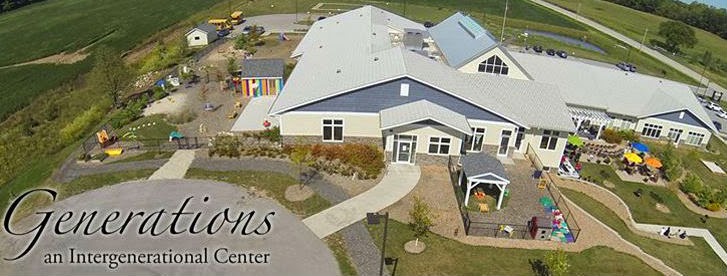
The Generations facility which sits on a 7 acre campus houses the Plymouth Adult Community Center, Growing Generations Child Care, 2 Head Start classrooms, a 4-K classroom, the Family Resource Center of Sheboygan County, the senior meal-site, an outreach office for Safe Harbor which is the sexual assault and domestic violence prevention agency in the county, and on Sundays has services for the New Life Community Church. 

Generations provides planned intergenerational programming but also offers many opportunities for accidental occurrences for relationship building for people of all ages. It also welcomes many organizations who use the facility regularly and partners with many groups and agencies from throughout the region.

Got something cool you tried that was successful? Why not tweet your cool intergenerational ideas to #cooligideas? You can also post them to our Intergenerational Connections Facebook Group. Youth Jumpstart Grantees can share ideas here. Or just text us through the Facebook Messenger app (friend me to join our Cool Intergenerational Ideas group discussion). We want to highlight innovative age-optimized programs and practices through our blog, social media and weekly e-newsletter!  Share the inspiration.

Tuesday, September 09, 2014

LinkAbility

EDITOR’s NOTE: Each week, we’ll feature intergenerational program ideas that were tried and successful. This series is a tool to highlight various age-optimized programs and practices. The program descriptions are provided by representatives of the programs. Inclusion in this series does not imply Generations United’s endorsement or recommendation, but rather encourages ideas to inspire other programs.

In part 16 of our series, we feature LinkAbility, a Durham, NC-based social action nonprofit.


For more than five years, LinkAbility has been working with students on social action issues tying them back to their community.

This year, they made a change to include their older adult population. They are seeing an intergenerational culture shift happening.

The Bio Legacy Project, The Garden Legacy Project, Generation Connection and The Alzheimer's Music Project(AMP) are all programs that create the paradigm....come be part of the change at www.linkabilitync.org.

Got something cool you tried that was successful? Why not tweet your cool intergenerational ideas to #cooligideas? You can also post them to our Intergenerational Connections Facebook Group. Youth Jumpstart Grantees can share ideas here. Or just text us through the Facebook Messenger app (friend me to join our Cool Intergenerational Ideas group discussion). We want to highlight innovative age-optimized programs and practices through our blog, social media and weekly e-newsletter!  Share the inspiration.

International Literacy Day

Yesterday was International Literacy Day, when the United Nations Educational, Scientific and Cultural Organization (UNESCO) and its partners launched a social media campaign to raise awareness of and concern for literacy problems in communities here and abroad.

It’s fitting that the day is during Grandparents Week, when we celebrate older Americans’ contributions.

In honor of International Literacy Day and Grandparents Week, we highlight UNESCO’s campaign as well as AARP Experience Corps, Senior Corps, Jumpstart and OASIS Institute - all of which use an intergenerational approach to promote literacy.

Through its campaign #literacyselfie, UNESCO and its partners called on all ages to take selfies reading their favorite book or reading to a child, and then posting the picture to Facebook, Twitter, and Instagram.

In addition to using the hashtag to contribute to the national movement, each community created their own local hashtag like #cleliteracy or #indyreads to capture local involvement.

Like UNESCO, Jumpstart takes a national focus to combat literacy problems.

Through its premiere national campaign, Read for the Record, Jumpstart mobilizes millions of children and adults to celebrate literacy by participating in the largest shared reading experience.

Since 2006, the campaign has, according to Jumpstart’s Campaign Impact, engaged 11.5 million children, raised more than $8.6 million for early education programs and provided more than 1.6 million books for children in low-income neighborhoods.

The year-round advocacy at AARP Experience Corps is just as impressive.

This award-winning national program engages people 50-plus in meeting their community's greatest challenges.

Two thousand volunteer members tutor and mentor in 19 cities across the country, providing literacy coaching, homework help, consistent role models and committed, caring attention.

Independent research shows that AARP Experience Corps boosts student academic performance, helps schools and youth-serving organizations become more successful, and enhances the well-being of adults 50 and older in the process.

The older adults at Senior Corps, a program of the Corporation for National and Community Service, are just as committed.

Conceived during John F. Kennedy's presidency, Senior Corps connects today’s 55+ with the people and organizations that need them most.

Through its Foster Grandparents initiative, older volunteers serve at thousands of local organizations that help children learn to read and provide one-on-one tutoring, mentor troubled teenagers and young mothers, care for premature infants or children with disabilities, and help children who have been abused or neglected.

In St. Louis, MO, OASIS Institute is also changing lives.

The program’s intergenerational tutoring connects seniors with children in grades K-4. Volunteers work one-on-one with children each week, helping youth build confidence and experience success.

Promoting literacy is one way you can Do Something Grand for Grandparents Week. Check out GrandparentsDay.org for other fun ideas.

Tuesday, September 02, 2014

GlamourGals

PHOTO: Courtesy of Glamour Gals Foundation, Inc.
EDITOR’s NOTE: Each week, we’ll feature intergenerational program ideas that were tried and successful. This series is a tool to highlight various age-optimized programs and practices. The program descriptions are provided by representatives of the programs. Inclusion in this series does not imply Generations United’s endorsement or recommendation, but rather encourages ideas to inspire other programs.

In part 15 of our series, we feature GlamourGals Foundation, Inc., a national nonprofit that engages over 1,400 teen volunteers through its 68 chapters.

(Checkour archives for parts 1-14.)

GlamourGals' mission is to inspire and organize teen volunteers to provide ongoing companionship and complimentary beauty makeovers to women living in senior homes.

Working to build a movement of young leaders who provide a solution to elder loneliness, the organization’s volunteer program engages teens in critical skill-building experiences and promotes their development as leaders.

Manicures and makeovers are just half the story.

GlamourGals’ teen volunteers are organized locally into chapters, which consist of approximately ten members led by teen leaders. Chapter leaders recruit, train and organize their volunteers with the support of GlamourGals National.

Chapters are established in high schools and colleges as independent school clubs or as permanent service activities within existing service clubs. Chapters commit to visiting their local senior home to provide GlamourGals’ signature manicures and makeovers.

In addition to makeovers, chapter leaders plan meetings, recruitment, training, and fundraising events, which involve their school and greater community.

GlamourGals National goes beyond just organizing volunteer chapters that provide ongoing visits to local senior homes. They provide training and mentorship for the teens in the program through a monthly curriculum, as well as incentives and scholarship rewards.

Got something cool you tried that was successful? Why not tweet your cool intergenerational ideas to #cooligideas? You can also post them to our Intergenerational Connections Facebook Group. Youth Jumpstart Grantees can share ideas here. Or just text us through the Facebook Messenger
app (friend me to join our Cool Intergenerational Ideas group discussion). We want to highlight innovative age-optimized programs and practices through our blog, social media and weekly e-newsletter!  Share the inspiration.

Thursday, August 28, 2014

Social Media Campaign for Best Intergenerational Communities Awards

.
Help Us Spread the Word!

Jump to:
Sample Facebook Posts | Sample Tweets | Sample Newsletter Item | Logos

It’s that time again! We need your help to spread the word about the MetLife Foundation/Generations United Best Intergenerational Communities Awards.

We’ve made it easy by offering text for sample Facebook mentions, tweets, and newsletter articles. We’ve also included logos you can use if you wish.

As always, we appreciate your help!

Add It to Facebook!


Sample Facebook posts for Best Intergenerational Communities Awards:


·       Think your community is a great place for all generations? Apply for a 2016 Best Intergenerational Communities Award sponsored by MetLife Foundation and Generations United. Application deadline is Jan. 15, 2016. Learn more at http://www.gu.org/OURWORK/Programs/BestIntergenerationalCommunities.aspx

·       Proud of your community? Does it offer a well-rounded life for all generations? Then apply today for a 2016 Best Intergenerational Communities Award sponsored by MetLife Foundation and Generations United. Application deadline is Jan. 15, 2016. Learn more at http://www.gu.org/OURWORK/Programs/BestIntergenerationalCommunities.aspx

·       There’s no place like home—especially if you live in a community that offers opportunities for every generation. Sound like your community? Then apply today for a MetLife/Generations United Best Intergenerational Communities Award.  Application deadline is Jan. 15, 2016. Learn more at http://www.gu.org/OURWORK/Programs/BestIntergenerationalCommunities.aspx

(top)

Tweet It!


Sample tweets for Best Intergenerational Communities Awards:


·       Best Intergenerational Communities. Is yours one? Enter MetLife Foundation/@GensUnited Awards Program. http://bit.ly/QI8TaN

·       Is your community great for all generations? Enter MetLife Foundation/@GensUnited Awards Program. http://bit.ly/QI8TaN

·       Tell us why your community outshines the rest. Enter MetLife Foundation/@Gens United Awards Program. http://bit.ly/QI8TaN

(top)

Newsletters


Sample Newsletter article for Best Intergenerational Communities Awards:


MetLife Foundation and Generations United are searching the nation for communities that place immense value on intergenerational connections and quality of life for all. If your community fits that description, they invite you to apply for the fourth annual Best Intergenerational Communities Awards program. Deadline to apply: Jan. 15, 2016. Learn more at http://www2.gu.org/OURWORK/Programs/BestIntergenerationalCommunities.aspx

(top)

Logos


Generations United logo:


Logo for MetLife Foundation/ Generations United Best Intergenerational Communities Awards Program:


(top)

Tuesday, August 26, 2014

Lemoore Adult Day Care Center

EDITOR’s NOTE: Each week, we’ll feature intergenerational program ideas that were tried and successful. This series is a tool to highlight various age-optimized programs and practices. The program descriptions are provided by representatives of the programs. Inclusion in this series does not imply Generations United’s endorsement or recommendation, but rather encourages ideas to inspire other programs.

In part 14 of our series, we feature Lemoore Adult Day Care Center, an intergenerational  shared site based in Lemoore, CA.

(Read parts 12345678910, 11, 12 and 13)

Their program shares a building with a Head Start program that serves around 78 children.

Throughout the year, Head Start participants collaborate with Lemoore Adult Day Care Center seniors on projects.

Middle school and high school students, who need service hours for their graduation requirements, also visit the Adult Day Program to work directly with seniors. Over the summer, school age children work in Lemoore’s youth program to help their low income families.

“Our program is the center of many generations, and we are proud to say that our seniors of our rural community,” explained Lemoore’s Director Pam Chin. “Also, our youth benefit from coming together and learning lessons to take with them as they become important citizens of our country.”

Got something cool you tried that was successful? Why not tweet your cool intergenerational ideas to #cooligideas? You can also post them to our Intergenerational Connections Facebook Group. Youth Jumpstart Grantees can share ideas here. Or just text us through the Facebook Messenger app (friend me to join our Cool Intergenerational Ideas group discussion). We want to highlight innovative age-optimized programs and practices through our blog, social media and weekly e-newsletter!  Share the inspiration.

Thursday, August 21, 2014

Nancy Gregory - Seniors4Kids Profile

Nancy Gregory describes herself as a type-A personality. After talking with her for some time, though, you would conclude that’s she’s far more than simply driven: she’s upbeat, caring, and at a good place in her life.

“I’m a homegrown Nebraskan who has lived in enough places to know that the Midwest is where I belong,” Gregory explains. “I went to graduate school in Boston and really liked that experience, then lived for a while in West Virginia, not far from Washington, DC. But I must admit that I really came to appreciate living in the Midwest. Life seems less complicated and moves at a little slower pace. And, it’s a great place to raise kids.”

Having a great place to raise kids has taken on new meaning for Gregory ever since the birth of her first grandchild, Michael, six months ago. And it will take on even more importance when her second grandchild arrives next June.

The 50-something retiree now spends her days caring for her grandson and three toddlers – and Gregory loves what she’s doing. “I have two passions in life: children and elder care. When I was a career woman, I was a health-care administrator with Veterans Affairs, working primarily with older adults,” she notes. “Now that I’m retired I get to indulge my other passion, working with children.”

But that’s only the beginning of Gregory’s encore career. Right after she retired in 2012, she took courses to get certified as a health care administrator for elders. Once she takes her certification exam, Gregory intends to blend her two passions by finding ways to connect older and younger generations through her work and volunteerism.

“I would love to see more connection and involvement between generations. My kids grew up away from their grandparents; it wasn’t until they were teenagers that my sons became close to their grandparents. They missed out on a lot of years of sharing time with their elders, particularly when they were very young and most impressionable. I know I learned my most important life lessons from my grandpa.

“It’s critical that older adults be around to be a soft landing for kids, to spoil them and be there for them. We now know that reading and talking to kids from a very young age is critical for early brain development and functioning. Most young parents are so busy worrying about putting food on the table, they don’t have all the time they would like to nurture their children’s development, especially in those important first five years of life.  Grandparents and other older adults have the time, the life experience and the passion to spend nurturing them.”

That’s where volunteering comes in – as does Gregory’s type-A personality.

“I joined the Nebraska Early Childhood Grandparent Network because I passionately believe that older adults’ life experience is critical to their ability to effectively advocate on behalf of children and youth. They can reflect on what they’ve learned over the years and put that experience to good use. Furthermore, older adults tend to have the time to devote to being strong advocates for children of all ages, whether they’re newborns or older adolescents.

“I also think the recent government shutdown was an eye-opener because it showed us how involved the government is in so many aspects of our lives, yet that it has limited resources. We need to look instead to our retiree population to get involved and build a strong legacy for future generations. As I contemplate my future role as a health care administrator for elders, I want to explore ways I can meld my passion for older adults with my passion for kids. I plan to spend more time volunteering and encouraging others to get involved. I also plan to spend a lot of time determining how I can help intersect the generations to bring older and younger together and share life experiences.


“I’m not exactly sure how I will bring all this about, but I do know that I intend to spend the rest of my life thinking about it – and trying to make a difference.”

Wednesday, August 20, 2014

First Lady Sally Ganem - Seniors4Kids Profile

PHOTO: Tim Hynds, Sioux City Journal

Like many Nebraskans you’re likely to meet, Sally Ganem is fiercely devoted to her state. In fact, she calls living in Nebraska, “…an opportunity to live the good life – and make the good life great.”

And as the state’s First Lady, she’s doing all she can to make the good life great for all of Nebraska’s citizens, especially the children.

Children have always been a priority for Ganem, a mother of one son and a former elementary school principal. From her many years in education, she understands the value of high-quality early learning and care.

"In my experience as an elementary school principal, it was so easy to see the difference between those children who had been part of quality early childhood programs or parenting, and those who had not. The ones who did have those experiences came to school prepared and hungry to learn.  They had a much broader vocabulary, were better able to share with classmates, and were more excited to explore new ideas.  The learning gap between those children is larger in kindergarten, and the gap only gets larger over time, expanding throughout their educational experience."

"Educational achievement is clearly tied to later success in life. Both my husband and I understand that business development and quality early childhood learning and care experiences are one and the same. In a competitive global economy, we need workers who have been encouraged to learn, explore and achieve from their earliest days of life.  These are the children who will grow up flexible, adaptable, curious, and able to think through challenges.  These are the kinds of citizens and workers who make Nebraska great."

“I believe that parents and grandparents are the most significant teachers of young children and the most significant persons in their lives – and I hope this legacy continues,” Ganem says. “I wish every child could have a caring, loving environment in which to grow. But that’s not always the case, and we need to make sure that all of Nebraska’s youngest children have the opportunities to learn, grow and realize their full potential, especially those who face the greatest challenges in their earliest years.”

Ganem believes one way to address the needs of children and youth is through volunteerism. “Children and youth are the future of this country. We need to invest in them by giving of our time and talents,” she notes. Calling volunteerism the backbone of efforts to improve children’s lives, Ganem proudly points to the fact that Nebraskans provide more than one billion dollars annually in volunteer service.

Omaha World Herald
“When I was principal of Howard Elementary School in Fremont, I saw the tremendous positive effect our older volunteers had on students,” Ganem explains. “I can’t imagine what my school would have been like without those volunteers; they made a world of difference to the children and to our school.  They were a special and completely unique source of warmth, support and encouragement for our children, and a valued resource for our parents and staff.”

“As a state and as a country, we will be in trouble if we don’t help our young people. Children need to have a voice in our communities. Grandparents and other older adults can give them that voice by advocating on their behalf. It’s reassuring for children to see older adults standing up for them.

“For older adults who want to join in the effort, I recommend they visit www.serve.nebraska.gov and www.seniors4kids.org, and get involved. It will make a world of difference to our children and to those who volunteer.”