Wednesday, May 26, 2010

New York Seniors4Kids Connect With Legislators


Headed by New York Seniors4Kids State Coordinator Paul Arfin, seven Captains4Kids visited legislators and legislators' offices in Albany, NY on Tuesday, May 25 as part of Winning Beginning New York's "Strengthening the Pre-K Investment: A Working Forum."

Captains had in-person visits to five legislators' offices, and hand-delivered New York Seniors4Kids Profile Publications to 62 legislative offices. Way to go, and thank you for all you do!


Photo captions: TOP, from L-R: Linda James, Henriette Miller, Marci Young of Pre-K Now, Margie Usher, Emma Kimble, Vivian Spears and Rosena Addison. BOTTOM, from L-R: Margie Usher, Linda James, State Senator Joseph Robach (R) of Rochester, Paul Arfin and Rosena Addison.


From Our Policy Team: America’s budget matters for all ages

This blog is part of Wider Opportunities for Women (WOW)’s 2nd annual blog day in honor of Older Americans Month. Share your thoughts on how the budget can support persons of all ages by visiting WOW’s website and writing your own blog http://www.wowonline.org/budgetmatters/

Above call, the federal budget is an expression of our values as a nation. In making a budget, Congress chooses what investments to make and how to raise adequate revenues to support those investments. Those budget decisions should be a manifestation of American values.

There is no greater core American value than our commitment to support families when they face financial hardship, disability, or death. Our budget should in particular support the most vulnerable members of the family: our children and seniors.

Many are using the economic downturn to argue for a reduced commitment to families. Reducing the deficit in the long-term is important because an unsustainable debt could harm our ability to make needed investments. However, enacting a balanced budget now would actually be counter-productive to an economic recovery. During a recession, deficit spending is necessary to get the economy moving again.

As Congress considers budget reforms, lawmakers should resist the temptation to cut vital benefits like Social Security. Congress should keep its promise and strengthen Social Security for all generations, ensuring that children, youth, and seniors receive critical investments across the lifespan.

Tuesday, May 25, 2010

Inter-Generational Center Site Visit: Moving Forward


Yesterday's intergenerational site visit event, where Assistant Secretary for Aging Kathy Greenlee, Assistant Secretary for Children and Families Carmen Nazario and Maryland Senator Ben Cardin showed their support for intergenerational programs, was a fabulous step as we at GU work to spread this successful model across the country.

At the event, GU Executive Director Donna Butts called on the Assistant Secretaries to convene a policy summit to forge a public-private partnership in which federal agencies, foundation leaders, policy makers and service providers can work together to increase the number of facilities that connect generations instead of separating them. She also urged policy makers to use an intergenerational lens when considering new policies and reauthorizations such as the Elementary Secondary Education Act (ESEA) and the Older Americans Act (OAA).

Here at GU, we're hard at work on moving forward with these key ideas. Join our work and be part of the intergenerational movement!

Monday, May 24, 2010

Inter-Generational Center Site Visit A Success!


We are celebrating the success of a wonderful site visit today at the Easter Seals’ Harry & Jeanette Weinberg Inter-Generational Center in Silver Spring, Md. where Assistant Secretary for Aging Kathy Greenlee, Assistant Secretary for Children and Families Carmen Nazario and Maryland Senator Ben Cardin -- along with many other governmental, philanthropic and executive leaders -- came together to stress the importance of cost effective and high-quality intergenerational shared sites for vulnerable seniors and children.

In their first joint public appearance, Assistant Secretaries Greenlee and Nazario praised the success of the program and encouraged others around the country to adopt the intergenerational model.

“One of the beauties of this facility is that it was intentionally designed to recognize the importance of relationships at all ages,” Assistant Secretary Nazario said. “This is the type of program that we need to promote throughout the country.”

“Seniors want and need to be active members of their communities and their families and their faith organizations for as long as they live,” Assistant Secretary Greenlee said. “It’s just so wonderful to come to a place like this and say, ‘This is the best we can do, and we should promote this everywhere in the nation.’”

Maryland Senator Cardin echoed the Secretaries’ remarks, calling intergenerational centers a “win-win-win” solution.

“The Easter Seals’ Harry & Jeanette Weinberg Inter-Generational Center is what I would call a ‘win-win-win’ for everyone involved,” said Senator Cardin. “It provides children with the support and comfort that can come from older adults, it gives seniors a sense of purpose as they interact with youngsters and it means communities will be able to pool their resources to provide more comprehensive services to both children and seniors. Inter-generational centers are an innovative, creative approach to help children, seniors and communities as they struggle with scarce resources.”

Attendees heard from Pamela Perry, the mother of twin 4-year-olds, one developmentally disabled, the other typically developing, who found the Inter-Generational Center in early 2009 after looking for a facility that could serve the needs of both of her children. At the Inter-Generational center, Perry found a place where both of her children could learn and grow together while forming valuable relationships with older adults. “When [my daughter] joined Easter Seals she was withdrawn and shy,” Perry said. “She has become a confident, conversant, joyful girl.” Her children have grown socially and intellectually from their interaction with older adults at the center. “For them, their elder friends are warm, caring grandparent substitutes,” Perry said.
“What we’re doing here before is not ‘what’s nice,’ but indeed, very necessary,” said Lisa Reeves, President and CEO of the Easter Seals Greater Washington-Baltimore Region, citing billions of dollars lost every year by businesses whose employees are struggling with caregiving responsibilities. “What you’re seeing here today is an opportunity to lead, not be led; to be ahead of the curve, not to react.”

Also in attendance were Bryan Samuels, Commissioner of the Administration on Children, Youth and Families and Joan Lombardi, Deputy Assistant Secretary and Inter-Departmental Liaison for Early Childhood Development Administration for Children and Families.


Thanks to all who worked long and hard to make this event possible, especially Lisa Reeves, Easter Seals Greater Washington-Baltimore Region Board Chairman Ralph Boyd and the whole Easter Seals team.

Photos: (Top) Sen. Cardin and Amare Smith, 4; (Middle) Assistant Secretary Greenlee watches an intergenerational activity; (Bottom) Assistant Secretary Nazario watches an intergenerational activity with Generations United Executive Director Donna Butts

For more photos, visit our Flickr album for the site visit.

Tuesday, May 18, 2010

Restoring the Social Security student benefit: The best policy idea you haven’t heard of yet

“I do believe we are responsible for the widow and the orphan.”

— Richard Gilbert, Tea Party supporter (New York Times, April 16, 2010)

Whether you are a Francis Perkins admirer or Sarah Palin follower, Americans believe Social Security is a promise worth protecting for all generations. Supporting the children of a diseased and disabled parent is a core American value enshrined in the values of the Social Security program, and reinstating the student benefit for post-secondary education should be a top priority of any reforms to strengthen Social Security. Since 1939, Social Security has supported the children of deceased, disabled or retired workers — that support now helps keep over a million vulnerable children out of poverty. In 1965, Congress recognized the growing importance of a college education and extended Social Security benefits for children of a deceased or disabled parent enrolled in college until age 22. The benefits were successful in helping children enroll in college and complete an education without having to enter the workforce when they turned 18 to support themselves and their family. In 1983, when Social Security faced a real crisis (unlike the phony one portrayed today), Congress sacrificed the benefit in a compromise to save the long-term solvency of the program. Today’s circumstances are vastly different and merit the restoration of the benefit.

According to an excellent new policy brief by Alexander Hertel-Fernandez and the National Academy of Social Insurance, a number of factors make the student benefit even more important for children than it was in 1983. First, the imperative of a college education continues to grow in a knowledge economy: “college graduates earn, on average, 61 percent more over their lifetimes than do high school graduates.” While the value of a college education has risen, so has its cost (roughly double since 1979). At the same time, youth have even less access to financial aid than ever before. The value of a Pell Grant has barely increased in real dollars, leaving it inadequate to meet the needs of rising education costs. The results have been devastating for the children of deceased and disabled parents. A 2003 study found that more than a third of the children eligible for the pre-1983 benefit did not enroll in college because of the lost benefit.

The two principal reasons cited in 1983 for the benefit elimination — a Social Security shortfall and administration challenges — are much less relevant today. The Social Security actuary estimated it would cost .07 percent of taxable payroll to restore the benefit (measured over the traditional 75-year Social Security window). The actuary did not consider how much that cost would be offset from the higher earnings and increased payroll tax contribution of the additional college graduates (paging Stephen Goss). In 1983, the Social Security Administration had some difficulty verifying student enrollment and eligibility for the benefit. Today, electronic verification through the FAFSA application (a requirement for almost all schools) would make such concerns moot. Given the extensive benefits of the student benefit to society and vulnerable youth and its rather miniscule potential cost, restoring the student is a policy equivalent of a no-brainer.

PA Seniors4Kids with Governor Rendell


Seniors4Kids take their passion for kids to the top! Here's a recent photo of Yvonne Thompson-Friend, Pennsylvania Seniors4Kids State Coordinator (left), with Pennsylvania Governor Edward G. Rendell (center). Read more about the recent PA Seniors4Kids event, which successfully connected older adults with lawmakers, here. Congratulations, Yvonne, and thank you for your hard work!

Wednesday, May 12, 2010

Celebrate Children's Book Week with Intergenerational Books

Children’s Book Week is May 10-16. Generations United’s Seniors4Kids recommends 10 titles for young children that spotlight connections between young children and older adults.

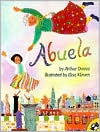
Abuela by Arthur Dorros

An innovative fantasy narrated by a Hispanic-American child who imagines she's rising into the air over the park and flying away with her loving, rosy-cheeked abuela (grandmother). From the air, they see Manhattan streets, docks, an airport, tourist attractions, and Rosalba's father's office.

Bigmama’s by Donald Crews


Visiting Bigmama's house in the country, young Donald Crews finds his relatives full of news and the old place and its surroundings just the same as the year before.

The Hello, Goodbye Window by Norton Juster, illustrated by Chris Raschka

The young narrator visits her grandparents, Nanna and Poppy, in their big house. They explore Nanna's garden, and Poppy plays his harmonica. Looking out the picture window, the "hello, goodbye window," she spots her parents coming to pick her up. The curly-haired girl is happy to see them, but sad because it means the end of the visit.

Jingle Dancer, by Cynthia Leitich Smith, illustrated by Cornelius Van Wright and Ying-Hwa Hu

Without enough tin jingles to make her dress sing, how can Jenna be a jingle dancer just like Grandma Wolfe at the next powwow? She borrows one row from Great-aunt Sis, whose aching legs keep her from dancing; another from Mrs. Scott, who sells fry bread; one from Cousin Elizabeth, whose work keeps her away from the festivities; and a fourth row from Grandma, who helps Jenna sew the jingles to her dress, assemble her regalia, and practice her bounce-steps.

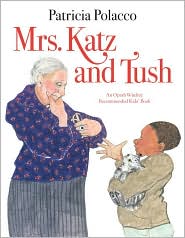
Mrs. Katz and Tush by Patricia Polacco

It is the beginning of a long friendship between Mrs. Katz, widowed, childless, and lonely, and her young African-American neighbor, Larnel, when he presents her with a scraggly kitten. On his daily visit to the elderly woman and her pet, they talk about Mrs. Katz's husband, her arrival in the United States from Poland, and the similar experiences of Jews and African-Americans.

Miss Rumphius by Barbara Cooney

As a child, Great-aunt Alice Rumphius resolved that when she grew up she would go to faraway places, live by the sea in her old age, and do something to make the world more beautiful--and she does all those things, the last being the most difficult of all.

Our Granny by Margaret Wild, illustrated by Julie Vivas

Two children compare their granny with others. Some grannies have thin legs, fat knees, crinkly eyes, or big soft laps. Their granny has a wobbly bottom and wears an old red sweater that was grandpa's. She has a style all her own—and to the children who love her, this granny is perfect.

The Raft by Jim Lamarche

Reluctuant Nicky spends a wonderful summer with Grandma who introduces him to the joy of rafting down the river near her home and watching the animals along the banks

Song and Dance Man by Stephen Gammell

In this Caldecott winner, Grandpa relives his vaudeville days for an adoring audience--his grandchildren.

Walk With Grandpa: Un Paseo con el Abuelo by Sharon Solomon

Ella and her grandfather find a peaceful walk in the woods leads to so much more. They express just how much they mean to each other by a simple word game they play together. Bilingual full text in both English and Spanish.


Synopses courtesy Amazon and Barnes & Noble

Tuesday, May 11, 2010

Celebrating Mother's Day at the White House

On Friday, First Lady Michelle Obama held an early celebration of Mother's Day by hosting a tea in the White House's East Room. Guests included former first ladies and daughters of former presidents, mothers and spouses of military personnel, and a remarkable young woman who has exemplified the importance of intergenerational service; Carrie Ryan.

Carrie is the 2009 recipient of Generations United’s Outstanding Youth Volunteer Award; an award which honors an individual who has made an outstanding contribution to an intergenerational program or has advocated for older adults and youth. While in high school, Carrie founded Bridging the Generations, an organization that connects high schools and retirement communities through service-learning projects. She then enrolled in an independent study course called “Images of Aging in Literature” which led her to further pursue her passion for intergenerational programs by connection her high school with a senior facility, Monte Vista Grove Homes, and creating a computer lab. Now a student at Sewanee University, Carrie is the head of the Senior Citizen’s Outreach Club. She has expanded the club’s outreach to five local retirement communities and has recruited many of her fellow college students to participate in visits to these older adult homes. Carrie continues to champion the mission of her organization and encourage the important connection between generations and their community.

The message of intergenerational appreciation was echoed several times by First Lady Michelle Obama at Friday’s event. The First Lady highlighted the message of President Carter’s 1979 Mother’s Day proclamation, in which he wrote: “In this time when the family is subjected to many new pressures, the job of nurturing future generations is often both more difficult and more important than ever.” Mrs. Obama went on to note the important contributions her own mother, Marian Robinson, has made to her life and her daughter’s lives—most notably the opportunity to have three generations living in the White House. The First Lady concluded by encouraging everyone in the room to share their stories and celebrate the extraordinary women in their lives. In honor of the women who shape our future generations, Happy Mother’s Day from Generations United!

-- Melissa Ness

Thursday, April 29, 2010

Last Day of ICIP Conference

Well, the fourth and final day of the 4th ICIP Conference has officially wrapped up. Well, technically the official end was the luncheon earlier in the day, but the Post Conference session is now over as well. GU's Donna Butts did a session on "Intergenerational Programmes by Schools (Community Involvement Programmes)" with yours truly assisting and leading some of the activities. It was a great session, getting into the nitty gritty of program development with schools.

The day started with a European Roundtable discussion in which we all got to hear about the great work being done in that part of the world and it was in conjuction with the 2nd European Day of Intergenerational Solidarity (go Europe!). The second roundtable discussion centered on Singapore and the work that is being done here (I can picture a Day of Intergenerational Solidarity here someday!)

A final keynote address from Professor Sarah Harper on the the future of intergenerational relations in the 21st century, the closing plenary and remarks finished off the morning. Mr. Lim Boon Heng, Minister, Prime Minister's Office spoke, which shows just how much the Singaporean government is investing in intergenerational programming, as well as Henry Quake, Dr. Leng Leng Thang and Donna Butts.

Overall it's been an amazing experience here in Singapore. It will be great to see how the work here grows in the coming years. And hey, if the work here should ever bring me back to this side of the world, I don't think I would say "no."

Officially signing off,
Roxana

Wednesday, April 28, 2010

From Donna Butts: Blogging From ICIP

Hello from Singapore and the International Consortium of Intergenerational Programmes (ICIP) conference!

All is going well here and our Singapore hosts are fabulous. We have several people here representing the U.S. including Prof. Matt Kaplan from Penn State; Prof. Shannon Jarrot from Virginia Tech; and Sister Edna Lonergan and Maggie Cary from the St. Ann Center for Intergenerational Care in Wisconsin.

The conference has been full of helpful and informative sessions for and by intergenerational advocates from around the world. When Singapore's Manpower Minister, Gan Kim Yong (equivalent to the U.S. Secretary of Labor) spoke at the conference, he announced that Singapore will increase employment opportunities for older Singaporeans. His full remarks are available here.

From Roxana Martinez: Day Three of ICIP Conference

Well, day three of the conference has now wrapped up. This means the conference is almost over. :-( There have been some great plenary sessions and workshop presentations today, it's hard to know which one to highlight. There was the Multigenerational Approaches to Social Inclusion and Community Cohesion plenary this morning, and the Enhancing Community Well-being Through Intergenerational Learning that highlighted some amazing programs in Canada, Sweden, the UK, and South Korea.

I ended the day with a site visit: The Peranakan Museum Experience - Keeping the Peranakan Culture Alive, which was just fascinating! Maybe it speaks to my love of all things history, but I loved learning about the Peranakans, their familial ties, traditions, culture. Many years ago traders came to this area of the world from as far as China and Saudi Arabia and married local women, these are the Peranakans, which means "child of" or "born of" in Malay.

Well, this is Roxana signing off for the day. It's off to the night safari I go, if the rain will let up that is! Take care.

~Roxana

Tuesday, April 27, 2010

From Roxana Martinez: Hello from Singapore!


GU's Program & Technology Coordinator Roxana Martinez is blogging from the International Consortium of Intergenerational Programmes (ICIP) conference in Singapore:

Greetings from Singapore! After a very long flight that included a stop in Tokyo, I made it. The first day of the conference has wrapped up and we're well into the second one. Day one was eventful with keynotes from members of the Singaporean government such as Minister GAN Kim Yong from the Ministry of Manpower, plenary sessions, and the Opening Dinner and the Intergenerational Bonding Awards Ceremony -- not unlike GU's Awards Banquet during our bi-ennial conference.


One truly special highlight was the dinner entertainment. It was a musical group that included a young girl of about age 8 who started a lovely and modern rendition of Pachelbel's Canon in D Major on the cello and ended with an older adult saxophone player. It brought tears to my eyes, though some of those I attribute to jetlag :-) Well, I'm off to my next session. Until next time.

Roxana Martinez

Thursday, April 22, 2010

The Newest Member of Facebook


Attention, world! The newest member of Facebook is Thomas Taylor, 83, Generations United's own Special Advisor for Seniors4Kids. We have an intergenerational workplace here and that means Tom got some Facebook coaching today from Halina Manno, our Grants and Operations Manager.


Are you on Facebook? Make sure you're connected to Generations United's Facebook page for news and resources -- and you can connect with Seniors4Kids as well!

Wednesday, April 21, 2010

Letter From Donna: Passing On The Gift Of Service

When Teddy Kennedy was a Massachusetts sixth-grader, he ate lunch every Sunday with his grandfather, John F. “Honey Fitz” Fitzgerald. A gifted communicator, former Boston mayor Honey Fitz would talk with people from all walks of life – from kitchen staffers to city politicians – asking about their children, their illnesses, their problems, their joys.

Although he was born into prestige and privilege, those lunches helped shape Senator Edward M. Kennedy into a champion of the poor and the less fortunate. Where did Kennedy’s drive to help others originate? “Initially, I got a good dose of it from my grandfather,” he would tell biographer Adam Clymer, “from a person who was not preaching.” Action, not words, taught Teddy the importance of service.

Senator Kennedy was not alone. Many of us learn the value of giving back to the community by observing family members or other older role models: mentors, friends or neighbors who connect across the years and share their wisdom and experience. Many in our country’s highest offices – including President Obama – were taught devotion to service at a grandparent’s knee.

That commitment is growing among older adults. In 2009, 19 million Americans age 55 and older volunteered in their communities, according to the latest Bureau of Labor Statistics data. That’s more than one in four, and up from 18.2 million in 2008. Those older adults volunteered, on average, 75 hours a year. The hours add up – according to the Corporation for National and Community Service, total volunteer hours contributed in 2008 were worth an estimated $162 billion.

These tangible benefits – accompanied by the intangible, long-term benefits of dedication and bonding – not only mold character, they mold a nation. A nation made of people like grandfather-and-grandson pair Ray Luyet and Quinn Hulsizer of Swiftwater, Penn., who volunteer together at their local Retired & Senior Volunteer Program in Monroe County, serving lunch and cleaning facilities for seniors and helping a physically challenged woman with errands. Or Mary Jane Stredde, 75, of Bethesda, Minn., who is known as ‘Grandma’ at the Head Start preschool where she volunteers several times a week. The benefits go both ways: The Dolby brothers – Ryan, 17, Austin, 15, and Connor, 13, are surrounded by a crowd of attentive, caring older adults on their regular visits to a Jacksonville, Fla assisted-living home. They teach Wii gaming skills – and learn patience, appreciation and respect.

This week we honor Senator Kennedy and his legacy of service in marking the one-year anniversary of the Kennedy Serve America Act, a landmark law that aims to bring opportunities for service into every home, to every American. The Serve America Act boosts volunteer efforts for all ages, strengthening service learning programs across the country and highlighting the contributions of older Americans.

One year ago, this legislative tribute to Senator Kennedy began to strengthen existing service programs and increase opportunities for intergenerational service in America. It expands AmeriCorps from 75,000 positions to 250,000 over five years, with ten percent of those spots saved for adults 55 and older. It creates a new Silver Scholarship Grant Program for older volunteers, rewarding them with scholarships that can be transferred to children or grandchildren. And it designates September 11 as the National Day of Service and Remembrance, calling on Americans to turn a memorial day into an opportunity for intergenerational service.

Senator Edward M. Kennedy envisioned an America in which strong communities are built by the collective contributions of individuals. He also recognized the value of connections across the generations – that a grandfather’s lessons, silently delivered, could show a young boy that wealth or good fortune didn’t mean ignoring the dispossessed. Kennedy’s message continues to ring true, as new generations of youth connect across the lifespan with older adults. As we observe National Volunteer Week from April 18 – 24 and the anniversary of the Serve America Act, let us honor the contributions of grandparents and older adults everywhere – and carry on Senator Kennedy’s legacy of service.

Wednesday, April 07, 2010

Funding Your Intergenerational Program

We invite you to join us on April 13th from 2:00 – 3:30 pm EDT for a webinar on "Creative Ways to Generate Funds For Your Intergenerational Program."

Programs from across the country have brainstormed creative ways to raise money to support their intergenerational programs. This free online training is open to anyone, but is designed for practitioners at intergenerational shared sites.

Register today at https://www1.gotomeeting.com/register/203431001

After registering, you will receive a confirmation email containing information about joining the webinar.

Contact Roxana Martinez at rmartinez@gu.org with any additional questions.

Thursday, April 01, 2010

President Obama fills out Census form as a member of a multi-gen household

President Obama joined millions of other Americans by filling out a Census form today and indicating that he lives in a multi-generational household. The 2010 Census is expected to indicate that the White House is part a growing trend of multi-generational households.

Here's what US Center Robert Groves said on the the White House blog:

The First Family experiences a unique privilege every day by living in the White House. But one aspect of their lives that is quite common also happens to be something that often causes confusion when people fill out the census form. The First Ladys mother lives with the family in the White House. Since the census asks for a count of everyone currently living in the household - not just immediate family - the President included his mother-in-law on his census form.

In 2000 over 4.2 million families reported living in a multi-generational household, an increase from 3.0 million households in 1990. The numbers are expected to continue to rise as more families come to depend on each other during difficult economic times. You can read much more about intergenrational families: their benefits and challenges, the reasons for their existence, and tips for making it work in Generations United's recent fact sheet.

Monday, March 22, 2010

The Benefits of Health Care Reform

Many folks have asked, "What, exactly, will health reform mean to me?" Below is a list of some of the many benefits available to children, youth, families, and older adults through health care reform. If you would like more detailed information on everything in the legislation, visit the Washington Post, the Kaiser Family Foundation, and the Center for Budget and Policy Priorities.

Benefits for Children, Youth, and Families*

· Guarantee access to health coverage for 95% of all children
· Prevent insurance companies from denying coverage because of pre-existing conditions or annual or lifetime limits (eliminating pre-existing conditions for children will take effect immediately)
· Children now covered in parent’s plan till age 26
· Expansion of CHIP for children aging out of foster care
· Medicaid expansion up to 133% of poverty
· Medicaid reimbursement rate raised for states
· Maintain the Children’s Health Insurance Program (CHIP) until it is determined whether the new “health insurance exchanges” are safe for children and provide them benefits and cost protections comparable to or better than they have now
· Fund CHIP through 2015 – doubling the number of eligible CHIP children that can be served from 7 to 14 million
· Extend coverage for youths in foster care to age 26.

Benefits for Seniors*

· Encourage states to develop more choices of long-term care services, to enable older people to live in their own homes instead of more expensive nursing homes.
· New regulations on insurance companies would bar them from dropping the coverage of people who get sick, and from putting lifetime caps on coverage. Starting in six months insurance companies could not discriminate against children with preexisting conditions; by 2014 all ages would receive that protection.
· Those in Medicare Part D who fall into the “doughnut hole,” and have to pay all their prescription drug costs for part of the year, would get immediate help this year from a $250 rebate. Next year they would get a 50 percent discount on brand-name drugs, and by 2020 the doughnut hole would be closed completely.
· Medicare would cover preventive services with no copayments, and those costs would not apply to the deductible.
· A new insurance exchange would help people who don’t have affordable insurance through their jobs. Until the exchange is set up, employers who give health care benefits for retirees ages 55 to 64 would get federal aid through a temporary reinsurance program.
· A new long-term care insurance program, which workers could pay into, would help them if they become ill or disabled and need help with basic services in order to stay in their homes.
· The Senate bill would strengthen Medicare by requiring insurance companies to competitively bid to offer private Medicare Advantage plans, a move that is estimated to save $118 billion from 2010 to 2019. Currently Medicare beneficiaries are subsidizing enrollees in these plans, which cost an average of 14 percent more than traditional Medicare.

* Benefits assume enactment of Reconciliation Patch (the Senate is expected to pass the patch later this week).

Sources (http://bulletin.aarp.org/yourhealth/policy/articles/democrats_release_their_final_health_care_reform_package.html, http://www.childrensdefense.org/helping-americas-children/childrens-health/health-coverage-for-all-children-campaign/health-reform-legislative-update.html)

House Passes Historic Health Care Reform Bill; Awaits President's Signature

Last night, the House of Representatives passed a historic reform of our nation’s health care system. The vote is victory for persons of all ages. The new law will extend coverage to millions of children and older adults, while helping seniors afford their prescription drugs and grant children more access to pediatricians. Grandparents raising millions of grandchildren will no longer face the prospect of having to choose between healthcare and potential bankruptcy. It will also help curb the rising costs of our health care system that threaten our nation’s finances.

Thank you to everyone that made calls and wrote letters. You can visit http://www.gu.org/TakeActionNow.asp and http://generationsunited.blogspot.com/ for continued updates on the legislation's impact on your family and constituents as well as information on how you can continue to communicate with your legislators. These reforms are long overdue, but are welcomed warmly!

Friday, March 19, 2010

Arizona Becomes the First State to Drop Children's Health Insurance Program

In times of economic downturn, children and seniors are most vulnerable.

On March 18th, faced with a $2.6 billion projected shortfall next year, Gov. Jan Brewer of Arizona signed a budget that will leave 47,000 low-income children without health insurance, reported the New York Times.

Additionally, according to the William E. Morris Institute for Justice, based in Phoenix, Governor Brewer and the State legislature are considering reducing the TANF (Temporary Assistance for Needy Families) grant from 60 to 36 months and restricting the program so that only a few families who take in their relative children will qualify for a TANF grant.

According to the Institute, "Only about 40% of unemployed persons are eligible for unemployment insurance benefits in Arizona. In these times of high unemployment and few jobs, TANF is truly the program of last resort. Children are helpless victims of the recession. Without TANF, these families will have no money to buy clothing, maintain stable housing or provide for their children’s basic needs... If enacted, this program will leave thousands of [Arizona's] poorest children with no support."

Arizona's budget cuts illuminate why it is critical for Congress to pass health care reform. Without health reform, more states will follow Arizona's lead and more children and families will be in danger. Until then, Generations United urges state legislators to continue to preserve CHIP and TANF funding. Even in times like this, a state's budget is inherently a moral document, as it communicates the state's priorities. Children, families, and older adults need our support and investment.