Wednesday, May 12, 2010

Celebrate Children's Book Week with Intergenerational Books

Children’s Book Week is May 10-16. Generations United’s Seniors4Kids recommends 10 titles for young children that spotlight connections between young children and older adults.

Abuela by Arthur Dorros
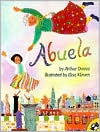
An innovative fantasy narrated by a Hispanic-American child who imagines she's rising into the air over the park and flying away with her loving, rosy-cheeked abuela (grandmother). From the air, they see Manhattan streets, docks, an airport, tourist attractions, and Rosalba's father's office.

Bigmama’s by Donald Crews


Visiting Bigmama's house in the country, young Donald Crews finds his relatives full of news and the old place and its surroundings just the same as the year before.

The Hello, Goodbye Window by Norton Juster, illustrated by Chris Raschka

The young narrator visits her grandparents, Nanna and Poppy, in their big house. They explore Nanna's garden, and Poppy plays his harmonica. Looking out the picture window, the "hello, goodbye window," she spots her parents coming to pick her up. The curly-haired girl is happy to see them, but sad because it means the end of the visit.

Jingle Dancer, by Cynthia Leitich Smith, illustrated by Cornelius Van Wright and Ying-Hwa Hu

Without enough tin jingles to make her dress sing, how can Jenna be a jingle dancer just like Grandma Wolfe at the next powwow? She borrows one row from Great-aunt Sis, whose aching legs keep her from dancing; another from Mrs. Scott, who sells fry bread; one from Cousin Elizabeth, whose work keeps her away from the festivities; and a fourth row from Grandma, who helps Jenna sew the jingles to her dress, assemble her regalia, and practice her bounce-steps.

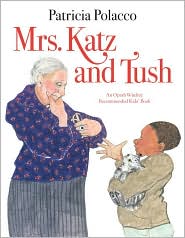
Mrs. Katz and Tush by Patricia Polacco

It is the beginning of a long friendship between Mrs. Katz, widowed, childless, and lonely, and her young African-American neighbor, Larnel, when he presents her with a scraggly kitten. On his daily visit to the elderly woman and her pet, they talk about Mrs. Katz's husband, her arrival in the United States from Poland, and the similar experiences of Jews and African-Americans.

Miss Rumphius by Barbara Cooney

As a child, Great-aunt Alice Rumphius resolved that when she grew up she would go to faraway places, live by the sea in her old age, and do something to make the world more beautiful--and she does all those things, the last being the most difficult of all.

Our Granny by Margaret Wild, illustrated by Julie Vivas

Two children compare their granny with others. Some grannies have thin legs, fat knees, crinkly eyes, or big soft laps. Their granny has a wobbly bottom and wears an old red sweater that was grandpa's. She has a style all her own—and to the children who love her, this granny is perfect.

The Raft by Jim Lamarche

Reluctuant Nicky spends a wonderful summer with Grandma who introduces him to the joy of rafting down the river near her home and watching the animals along the banks

Song and Dance Man by Stephen Gammell

In this Caldecott winner, Grandpa relives his vaudeville days for an adoring audience--his grandchildren.

Walk With Grandpa: Un Paseo con el Abuelo by Sharon Solomon

Ella and her grandfather find a peaceful walk in the woods leads to so much more. They express just how much they mean to each other by a simple word game they play together. Bilingual full text in both English and Spanish.


Synopses courtesy Amazon and Barnes & Noble

Tuesday, May 11, 2010

Celebrating Mother's Day at the White House

On Friday, First Lady Michelle Obama held an early celebration of Mother's Day by hosting a tea in the White House's East Room. Guests included former first ladies and daughters of former presidents, mothers and spouses of military personnel, and a remarkable young woman who has exemplified the importance of intergenerational service; Carrie Ryan.

Carrie is the 2009 recipient of Generations United’s Outstanding Youth Volunteer Award; an award which honors an individual who has made an outstanding contribution to an intergenerational program or has advocated for older adults and youth. While in high school, Carrie founded Bridging the Generations, an organization that connects high schools and retirement communities through service-learning projects. She then enrolled in an independent study course called “Images of Aging in Literature” which led her to further pursue her passion for intergenerational programs by connection her high school with a senior facility, Monte Vista Grove Homes, and creating a computer lab. Now a student at Sewanee University, Carrie is the head of the Senior Citizen’s Outreach Club. She has expanded the club’s outreach to five local retirement communities and has recruited many of her fellow college students to participate in visits to these older adult homes. Carrie continues to champion the mission of her organization and encourage the important connection between generations and their community.

The message of intergenerational appreciation was echoed several times by First Lady Michelle Obama at Friday’s event. The First Lady highlighted the message of President Carter’s 1979 Mother’s Day proclamation, in which he wrote: “In this time when the family is subjected to many new pressures, the job of nurturing future generations is often both more difficult and more important than ever.” Mrs. Obama went on to note the important contributions her own mother, Marian Robinson, has made to her life and her daughter’s lives—most notably the opportunity to have three generations living in the White House. The First Lady concluded by encouraging everyone in the room to share their stories and celebrate the extraordinary women in their lives. In honor of the women who shape our future generations, Happy Mother’s Day from Generations United!

-- Melissa Ness

Thursday, April 29, 2010

Last Day of ICIP Conference

Well, the fourth and final day of the 4th ICIP Conference has officially wrapped up. Well, technically the official end was the luncheon earlier in the day, but the Post Conference session is now over as well. GU's Donna Butts did a session on "Intergenerational Programmes by Schools (Community Involvement Programmes)" with yours truly assisting and leading some of the activities. It was a great session, getting into the nitty gritty of program development with schools.

The day started with a European Roundtable discussion in which we all got to hear about the great work being done in that part of the world and it was in conjuction with the 2nd European Day of Intergenerational Solidarity (go Europe!). The second roundtable discussion centered on Singapore and the work that is being done here (I can picture a Day of Intergenerational Solidarity here someday!)

A final keynote address from Professor Sarah Harper on the the future of intergenerational relations in the 21st century, the closing plenary and remarks finished off the morning. Mr. Lim Boon Heng, Minister, Prime Minister's Office spoke, which shows just how much the Singaporean government is investing in intergenerational programming, as well as Henry Quake, Dr. Leng Leng Thang and Donna Butts.

Overall it's been an amazing experience here in Singapore. It will be great to see how the work here grows in the coming years. And hey, if the work here should ever bring me back to this side of the world, I don't think I would say "no."

Officially signing off,
Roxana

Wednesday, April 28, 2010

From Donna Butts: Blogging From ICIP

Hello from Singapore and the International Consortium of Intergenerational Programmes (ICIP) conference!

All is going well here and our Singapore hosts are fabulous. We have several people here representing the U.S. including Prof. Matt Kaplan from Penn State; Prof. Shannon Jarrot from Virginia Tech; and Sister Edna Lonergan and Maggie Cary from the St. Ann Center for Intergenerational Care in Wisconsin.

The conference has been full of helpful and informative sessions for and by intergenerational advocates from around the world. When Singapore's Manpower Minister, Gan Kim Yong (equivalent to the U.S. Secretary of Labor) spoke at the conference, he announced that Singapore will increase employment opportunities for older Singaporeans. His full remarks are available here.

From Roxana Martinez: Day Three of ICIP Conference

Well, day three of the conference has now wrapped up. This means the conference is almost over. :-( There have been some great plenary sessions and workshop presentations today, it's hard to know which one to highlight. There was the Multigenerational Approaches to Social Inclusion and Community Cohesion plenary this morning, and the Enhancing Community Well-being Through Intergenerational Learning that highlighted some amazing programs in Canada, Sweden, the UK, and South Korea.

I ended the day with a site visit: The Peranakan Museum Experience - Keeping the Peranakan Culture Alive, which was just fascinating! Maybe it speaks to my love of all things history, but I loved learning about the Peranakans, their familial ties, traditions, culture. Many years ago traders came to this area of the world from as far as China and Saudi Arabia and married local women, these are the Peranakans, which means "child of" or "born of" in Malay.

Well, this is Roxana signing off for the day. It's off to the night safari I go, if the rain will let up that is! Take care.

~Roxana

Tuesday, April 27, 2010

From Roxana Martinez: Hello from Singapore!


GU's Program & Technology Coordinator Roxana Martinez is blogging from the International Consortium of Intergenerational Programmes (ICIP) conference in Singapore:

Greetings from Singapore! After a very long flight that included a stop in Tokyo, I made it. The first day of the conference has wrapped up and we're well into the second one. Day one was eventful with keynotes from members of the Singaporean government such as Minister GAN Kim Yong from the Ministry of Manpower, plenary sessions, and the Opening Dinner and the Intergenerational Bonding Awards Ceremony -- not unlike GU's Awards Banquet during our bi-ennial conference.


One truly special highlight was the dinner entertainment. It was a musical group that included a young girl of about age 8 who started a lovely and modern rendition of Pachelbel's Canon in D Major on the cello and ended with an older adult saxophone player. It brought tears to my eyes, though some of those I attribute to jetlag :-) Well, I'm off to my next session. Until next time.

Roxana Martinez

Thursday, April 22, 2010

The Newest Member of Facebook


Attention, world! The newest member of Facebook is Thomas Taylor, 83, Generations United's own Special Advisor for Seniors4Kids. We have an intergenerational workplace here and that means Tom got some Facebook coaching today from Halina Manno, our Grants and Operations Manager.


Are you on Facebook? Make sure you're connected to Generations United's Facebook page for news and resources -- and you can connect with Seniors4Kids as well!

Wednesday, April 21, 2010

Letter From Donna: Passing On The Gift Of Service

When Teddy Kennedy was a Massachusetts sixth-grader, he ate lunch every Sunday with his grandfather, John F. “Honey Fitz” Fitzgerald. A gifted communicator, former Boston mayor Honey Fitz would talk with people from all walks of life – from kitchen staffers to city politicians – asking about their children, their illnesses, their problems, their joys.

Although he was born into prestige and privilege, those lunches helped shape Senator Edward M. Kennedy into a champion of the poor and the less fortunate. Where did Kennedy’s drive to help others originate? “Initially, I got a good dose of it from my grandfather,” he would tell biographer Adam Clymer, “from a person who was not preaching.” Action, not words, taught Teddy the importance of service.

Senator Kennedy was not alone. Many of us learn the value of giving back to the community by observing family members or other older role models: mentors, friends or neighbors who connect across the years and share their wisdom and experience. Many in our country’s highest offices – including President Obama – were taught devotion to service at a grandparent’s knee.

That commitment is growing among older adults. In 2009, 19 million Americans age 55 and older volunteered in their communities, according to the latest Bureau of Labor Statistics data. That’s more than one in four, and up from 18.2 million in 2008. Those older adults volunteered, on average, 75 hours a year. The hours add up – according to the Corporation for National and Community Service, total volunteer hours contributed in 2008 were worth an estimated $162 billion.

These tangible benefits – accompanied by the intangible, long-term benefits of dedication and bonding – not only mold character, they mold a nation. A nation made of people like grandfather-and-grandson pair Ray Luyet and Quinn Hulsizer of Swiftwater, Penn., who volunteer together at their local Retired & Senior Volunteer Program in Monroe County, serving lunch and cleaning facilities for seniors and helping a physically challenged woman with errands. Or Mary Jane Stredde, 75, of Bethesda, Minn., who is known as ‘Grandma’ at the Head Start preschool where she volunteers several times a week. The benefits go both ways: The Dolby brothers – Ryan, 17, Austin, 15, and Connor, 13, are surrounded by a crowd of attentive, caring older adults on their regular visits to a Jacksonville, Fla assisted-living home. They teach Wii gaming skills – and learn patience, appreciation and respect.

This week we honor Senator Kennedy and his legacy of service in marking the one-year anniversary of the Kennedy Serve America Act, a landmark law that aims to bring opportunities for service into every home, to every American. The Serve America Act boosts volunteer efforts for all ages, strengthening service learning programs across the country and highlighting the contributions of older Americans.

One year ago, this legislative tribute to Senator Kennedy began to strengthen existing service programs and increase opportunities for intergenerational service in America. It expands AmeriCorps from 75,000 positions to 250,000 over five years, with ten percent of those spots saved for adults 55 and older. It creates a new Silver Scholarship Grant Program for older volunteers, rewarding them with scholarships that can be transferred to children or grandchildren. And it designates September 11 as the National Day of Service and Remembrance, calling on Americans to turn a memorial day into an opportunity for intergenerational service.

Senator Edward M. Kennedy envisioned an America in which strong communities are built by the collective contributions of individuals. He also recognized the value of connections across the generations – that a grandfather’s lessons, silently delivered, could show a young boy that wealth or good fortune didn’t mean ignoring the dispossessed. Kennedy’s message continues to ring true, as new generations of youth connect across the lifespan with older adults. As we observe National Volunteer Week from April 18 – 24 and the anniversary of the Serve America Act, let us honor the contributions of grandparents and older adults everywhere – and carry on Senator Kennedy’s legacy of service.

Wednesday, April 07, 2010

Funding Your Intergenerational Program

We invite you to join us on April 13th from 2:00 – 3:30 pm EDT for a webinar on "Creative Ways to Generate Funds For Your Intergenerational Program."

Programs from across the country have brainstormed creative ways to raise money to support their intergenerational programs. This free online training is open to anyone, but is designed for practitioners at intergenerational shared sites.

Register today at https://www1.gotomeeting.com/register/203431001

After registering, you will receive a confirmation email containing information about joining the webinar.

Contact Roxana Martinez at rmartinez@gu.org with any additional questions.

Thursday, April 01, 2010

President Obama fills out Census form as a member of a multi-gen household

President Obama joined millions of other Americans by filling out a Census form today and indicating that he lives in a multi-generational household. The 2010 Census is expected to indicate that the White House is part a growing trend of multi-generational households.

Here's what US Center Robert Groves said on the the White House blog:

The First Family experiences a unique privilege every day by living in the White House. But one aspect of their lives that is quite common also happens to be something that often causes confusion when people fill out the census form. The First Ladys mother lives with the family in the White House. Since the census asks for a count of everyone currently living in the household - not just immediate family - the President included his mother-in-law on his census form.

In 2000 over 4.2 million families reported living in a multi-generational household, an increase from 3.0 million households in 1990. The numbers are expected to continue to rise as more families come to depend on each other during difficult economic times. You can read much more about intergenrational families: their benefits and challenges, the reasons for their existence, and tips for making it work in Generations United's recent fact sheet.

Monday, March 22, 2010

The Benefits of Health Care Reform

Many folks have asked, "What, exactly, will health reform mean to me?" Below is a list of some of the many benefits available to children, youth, families, and older adults through health care reform. If you would like more detailed information on everything in the legislation, visit the Washington Post, the Kaiser Family Foundation, and the Center for Budget and Policy Priorities.

Benefits for Children, Youth, and Families*

· Guarantee access to health coverage for 95% of all children
· Prevent insurance companies from denying coverage because of pre-existing conditions or annual or lifetime limits (eliminating pre-existing conditions for children will take effect immediately)
· Children now covered in parent’s plan till age 26
· Expansion of CHIP for children aging out of foster care
· Medicaid expansion up to 133% of poverty
· Medicaid reimbursement rate raised for states
· Maintain the Children’s Health Insurance Program (CHIP) until it is determined whether the new “health insurance exchanges” are safe for children and provide them benefits and cost protections comparable to or better than they have now
· Fund CHIP through 2015 – doubling the number of eligible CHIP children that can be served from 7 to 14 million
· Extend coverage for youths in foster care to age 26.

Benefits for Seniors*

· Encourage states to develop more choices of long-term care services, to enable older people to live in their own homes instead of more expensive nursing homes.
· New regulations on insurance companies would bar them from dropping the coverage of people who get sick, and from putting lifetime caps on coverage. Starting in six months insurance companies could not discriminate against children with preexisting conditions; by 2014 all ages would receive that protection.
· Those in Medicare Part D who fall into the “doughnut hole,” and have to pay all their prescription drug costs for part of the year, would get immediate help this year from a $250 rebate. Next year they would get a 50 percent discount on brand-name drugs, and by 2020 the doughnut hole would be closed completely.
· Medicare would cover preventive services with no copayments, and those costs would not apply to the deductible.
· A new insurance exchange would help people who don’t have affordable insurance through their jobs. Until the exchange is set up, employers who give health care benefits for retirees ages 55 to 64 would get federal aid through a temporary reinsurance program.
· A new long-term care insurance program, which workers could pay into, would help them if they become ill or disabled and need help with basic services in order to stay in their homes.
· The Senate bill would strengthen Medicare by requiring insurance companies to competitively bid to offer private Medicare Advantage plans, a move that is estimated to save $118 billion from 2010 to 2019. Currently Medicare beneficiaries are subsidizing enrollees in these plans, which cost an average of 14 percent more than traditional Medicare.

* Benefits assume enactment of Reconciliation Patch (the Senate is expected to pass the patch later this week).

Sources (http://bulletin.aarp.org/yourhealth/policy/articles/democrats_release_their_final_health_care_reform_package.html, http://www.childrensdefense.org/helping-americas-children/childrens-health/health-coverage-for-all-children-campaign/health-reform-legislative-update.html)

House Passes Historic Health Care Reform Bill; Awaits President's Signature

Last night, the House of Representatives passed a historic reform of our nation’s health care system. The vote is victory for persons of all ages. The new law will extend coverage to millions of children and older adults, while helping seniors afford their prescription drugs and grant children more access to pediatricians. Grandparents raising millions of grandchildren will no longer face the prospect of having to choose between healthcare and potential bankruptcy. It will also help curb the rising costs of our health care system that threaten our nation’s finances.

Thank you to everyone that made calls and wrote letters. You can visit http://www.gu.org/TakeActionNow.asp and http://generationsunited.blogspot.com/ for continued updates on the legislation's impact on your family and constituents as well as information on how you can continue to communicate with your legislators. These reforms are long overdue, but are welcomed warmly!

Friday, March 19, 2010

Arizona Becomes the First State to Drop Children's Health Insurance Program

In times of economic downturn, children and seniors are most vulnerable.

On March 18th, faced with a $2.6 billion projected shortfall next year, Gov. Jan Brewer of Arizona signed a budget that will leave 47,000 low-income children without health insurance, reported the New York Times.

Additionally, according to the William E. Morris Institute for Justice, based in Phoenix, Governor Brewer and the State legislature are considering reducing the TANF (Temporary Assistance for Needy Families) grant from 60 to 36 months and restricting the program so that only a few families who take in their relative children will qualify for a TANF grant.

According to the Institute, "Only about 40% of unemployed persons are eligible for unemployment insurance benefits in Arizona. In these times of high unemployment and few jobs, TANF is truly the program of last resort. Children are helpless victims of the recession. Without TANF, these families will have no money to buy clothing, maintain stable housing or provide for their children’s basic needs... If enacted, this program will leave thousands of [Arizona's] poorest children with no support."

Arizona's budget cuts illuminate why it is critical for Congress to pass health care reform. Without health reform, more states will follow Arizona's lead and more children and families will be in danger. Until then, Generations United urges state legislators to continue to preserve CHIP and TANF funding. Even in times like this, a state's budget is inherently a moral document, as it communicates the state's priorities. Children, families, and older adults need our support and investment.


Wednesday, March 17, 2010

Policy Alert: President Obama to Speak on Health Care Reform at George Mason University

This Friday, March 19, 2010, President Obama will speak on the urgent need for health care reform in Fairfax, Virginia at George Mason University’s Patriot Center. Doors open at 9:00AM EST and the event kicks off at 11:30AM. This event is free and open to the public and doors open at 9 AM. No tickets are required for this event. Please arrive early to ensure admittance.

If you plan to attend, please email mness@gu.org with the subject “Health Care RSVP” and include the number of attendees.


EVENT LOCATION
The George Mason University Patriot Center
4500 Patriot Circle
Fairfax, VA 22030

Further information is available at www.whitehouse.gov/GMUremarks

Thursday, March 11, 2010

Letter on the National Commission on Fiscal Responsibility

Below is a letter from Donna to President Obama, Congressional Leaders, and Co-Chairs of the National Commission on Fiscal Responsibility.


March 12, 2010


Dear Mr. President, Congressional Leaders, and Commission Co-Chairs:


Generations United, the national membership organization focused solely on improving the lives of children, youth, and older adults through intergenerational solutions and policies, asks the National Commission on Fiscal Responsibility to refrain from using the commission to fuel a false sense of competition between the generations. Generations United shares the commission’s aim of reducing the federal debt and balancing the budget, but believes those goals must not come at the expense of unraveling federal investments and supports for the young and the old.


Some vocal commentators assert that it is necessary to cut vital programs like Social Security and Medicaid for the future of our children and our grandchildren. These arguments presuppose that these programs do not benefit children. Generations United urges the commission to use its important role in educating the public to explain the key role Social Security plays in lifting millions of children out of poverty – paying more benefits to children than any other federal program. Generations United questions how our children will benefit from fewer investments as they age and pass through our schools, job market, and into retirement. The best gift we can give our children and grandchildren is a nation with a strong safety net that supports people of all ages.


The best way for the commission to prevent intergenerational conflict is to ensure an open and transparent process. An open process will allow Americans to become more familiar and informed on any potential recommendations from the commission. Individuals and organizations representing a broad segment of society should be offered the opportunity to comment publicly on the available policy options open to the commission.


Please do not hesitate to contact us in the future; we look forward to being a resource to the commission.


Sincerely,


Donna M. Butts

Executive Director


Monday, March 08, 2010

From Donna Butts: Help for children here and abroad

The children of Haiti are the most visible, most raw symbols of that earthquake-ravaged country’s persistent needs. Their stories of injury and loss continue to haunt us long after the news segments fade. Their anguished faces remind us that the devastation we view from the comfort of our homes is a daily reality for them.

Understandably, many well-intentioned Americans have been moved to open their homes as well as their hearts to Haitian children. Agencies are overwhelmed by requests from families who want to end the suffering they see on their television screens. Church groups are holding seminars. Nonprofits are raising money for rescue missions. Pending legislation in Washington D.C. seeks to bring Haitian children to the U.S., placing them in foster care before matching them with parents.

Philanthropists, politicians, and pundits have been weighing in on whether adoption is the appropriate response to this crisis. In the midst of news that has become an international controversy, however, lies a larger truth. All children deserve a permanent, loving home with a family that will protect, nurture and guide them.

Natural disasters dramatically threaten the survival of families and children. So, too, can the challenges of life here at home. The scenes of loss and terror, the long and laborious journey to stability, play out not only in Port-Au-Prince, but in neighborhoods, towns, and cities across America.

Even as our nation’s attention is focused on the plight of Haitian children, we must keep in mind the critical importance of strengthening the safety net we have established for children in our own country who have experienced abuse or neglect.

More than half a million children across the U.S. are currently living in foster care. Although foster care is intended to be a temporary refuge until families can put their lives back on track, children spend more than two years, on average, in the foster care system. Each year, thousands of youth turn 18 and “age out” of foster care with no permanent family to rely upon.

Adoption is one of several options for children in foster care who cannot safely remain at home. Legal guardianship by a relative is another. Almost a fourth of children in foster care live with grandparents, aunts and uncles, and other relatives. Foster children who have been placed with relatives are more likely to live with their brothers and sisters; stay connected to their communities, culture, and heritage; and less likely to change schools. All of these are factors that lead to a healthy, productive adulthood.

Today, in state capitals across the nation, lawmakers are crafting strategies to protect vulnerable children and strengthen support for families by implementing the federal Fostering Connections to Success and Increasing Adoption Act of 2008. The Fostering Connections legislation aims to increase the number children exiting foster care with safe, permanent, loving families through adoptions and guardianships with relatives. You age out of a system, but you can’t age out of a family.

Fostering Connections is a vital, and urgently-needed, step forward to benefit children and families. We must show our state lawmakers that the passion we have for the people of Haiti – evidenced in the millions of dollars given in personal and corporate checks, government commitments, and offering plates – is matched by the passion we have for children in the U.S.

Our determination to protect and provide for Haiti’s children is a shining example of the human spirit. Let us harness that energy to protect children in need on American shores, as well.

Wednesday, March 03, 2010

Statement from Donna Butts on Health Care Reform

Following President Obama's remarks on Wednesday, March 3, Generations United Executive Director Donna Butts issued the following statement, urging members of Congress to continue their efforts to extend healthcare to our nation's most vulnerable citizens.

"Our nation cannot continue to allow millions of Americans from all generations to go without access to high-quality affordable health care. Nothing is more important for the long-term success of our children, families, and older adults than Congress finishing healthcare reform.

Generations United welcomes the president's proposal to help more people access care through the Medicaid program. By increasing the Medicaid reimbursement rate, more children and seniors will be able to find a doctor or hospital willing to extend care to them.

In his call to action, the president recognized children, young adults, and older adults still face an insurance market that can refuse to cover them because of a preexisting condition, or bankrupt them because of inadequate coverage. Our nation's seniors are still without a long-term-care insurance program and our children still need access to preventive care. We applaud this important effort today. While not perfect, this bill makes important strides in addressing an issue that touches all generations."

E-mail cscott@gu.org for more information.

Kentucky Seniors4Kids are featured in this "Blueprint for Kentucky's Children" video by Kentucky Youth Advocates! At 6:10, this video highlighting solutions for improving child well-being in Kentucky shows Seniors4Kids advocates Mary Musgrave, Pat Murrell and Major General James B. Baylor speaking up for the importance of quality pre-k.


Thursday, February 25, 2010

New Momentum on Health Reform

There is new hope for the millions of uninsured and underinsured children, youth, and older adults. Later today, Congressional leaders and the President will convene in the Blair House, across from the White House, to discuss the future of health reform. Earlier this week the President released his own proposal that makes a number of important changes to the Senate health care bill that passed earlier this year. Nobody expects there to be unanimous agreement over the President’s proposal today, but people do deserve a reasonable and constructive debate from our nation’s leaders.

Inaction on health care reform is not an option; the rolls of the uninsured will continue to rise, while others will face higher premiums and shrinking coverage. Generations United is pleased President Obama and Congress have decided to continue the important work to make sure people of all ages have access to high-quality, affordable health insurance.

Tuesday, February 23, 2010

PA Seniors4Kids Bernard Chatman in Chronicle of Philanthropy

Looking for inspiration? PA Seniors4Kids Captain Bernard Chatman shared his story in last week's edition of The Chronicle of Philanthropy. You must be a Chronicle subscriber to read the entire article, which includes the following eloquent words from Bernard:

"We must invest in high-quality pre-kindergarten programs to give every child the ability to become more productive in ways that benefit all of us economically and socially as well. Pre-kindergarten programs don’t just help individual children and their families, they provide benefits for generations to come through creating stronger communities, responsible citizens, and successful students.

On my most recent birthday, I turned 59. My contemporaries and I do not see ourselves as old. We believe our lives have just started.

We are blessed with wisdom and the experience of long lives, and we have much to give to the generations who follow us. When we see children who are troubled by difficulties in school or in life, we have learned not merely to say, “What’s wrong?” but also to ask, “How can I help?”

Thursday, February 18, 2010

From the Policy Desk: What the Presidential Budget Commission Should Do

Today, President Obama signed an executive order establishing the National Commission on Fiscal Responsibility and Reform made up of six presidential appointees and twelve appointees from Congressional leaders. The commission is tasked with reaching an overwhelming consensus (14 of 18 members must agree) on a plan to close the federal deficit by the middle of the decade, as well as making sure the long-term budget outlook of the United States is sustainable. I’ve blogged about the dangers of budget commissions before, but I thought it might be helpful to suggest three positive things the budget commission could do.

1. Strengthen Social Security for all ages. Social Security is the most successful anti-poverty program in this country’s history. It provides invaluable support for current retirees, future retirees and children. Social Security will continue to run a surplus until 2023, but faces a relatively modest long-term shortfall. The commission should reach out to Social Security actuaries and put together a package of reforms that strengthens both the program’s adequacy and solvency.

2. Our children, youth, and seniors need critical investments across the lifespan. Our budget should reflect the values of our nation and our commitment to protect the most vulnerable.

3. Provide a budget plan that raises adequate revenues. A new report from the Center for Economic Policy Research points out that our budget woes are largely driven by the great recession and changes in the tax policy last decade.

Seniors4Kids stand up for early childhood education

In Kentucky, Pennsylvania, New Jersey and New York, older adults are gathering together to show support for quality early childhood education. Their voices are being heard.

Today in Frankfort, Kentucky, Kentucky Seniors4Kids Captains raised their voices for children at the Capitol Rotunda, meeting legislators, writing letters and participating in an intergenerational activity with AmeriCorps members.

Pennsylvania Seniors4Kids made headlines today with a letter to the editor published in the Pittsburgh Post-Gazette by State Coordinator Yvonne Thompson-Friend.

New York Seniors4Kids State Coordinator Paul Arfin had a letter to the editor published in the New York Times this month as well.

For more, see the Seniors4Kids website.

Friday, February 12, 2010

Snowed In


Hello all,
Here in D.C. we've been snowed under for about a week now -- but our staff has been working diligently from home and in our Texas office!

Connect for Kids has a great Q&A with Brenda Eheart, founder and CEO of Generations of Hope, which created Hope Meadows, the intergenerational community in Rantoul, Illinois, where families adopt neglected and abused children from the foster care system.

She speaks eloquently about finding intergenerational solutions to challenges faced by people of all ages:

"There is tremendous interest in intergenerational communities, in having older adults play a significant role in solving social problems related to vulnerable people. We recently had a group come to us who wanted to design a community for developmentally challenged adults. There are many other groups that might have need for these kinds of communities – whether it is young mothers with drug addictions or kids coming out of foster care with developmental delays."

"We’re very grateful that the concept has grown enough now that anybody can understand what we’re doing."

Read the rest here.

Friday, February 05, 2010

Register for the ICIP conference now!

Hello all! Early Bird Registration is now open for the 4th International Consortium for Intergenerational Programmes (ICIP) Conference, 26-29 April 2010: "Linking Generations - Family, Work, Community"! This year's conference is in Singapore; GU's Donna Butts will be one of the featured speakers.

Tuesday, February 02, 2010

Spending Ratios Don't Show The Whole Picture

Donna hopes to say more about David Brooks’ column today in the New York Times later (there’s a lot to like about it). I do want to respond briefly to his point about spending on children and seniors.

Brooks cites a recent study by Julia Isaacs of the Brookings Institution that lists the ratio of federal spending between seniors and children at 7:1. Various other columnists have picked up this headline-generating ratio. Notice, pundits rarely use the 2.4:1 ratio for all government spending – most government spending on children is at the local and state level – since it plays less into their selected narrative. However, no matter what ratio they cite, this comparison is deeply flawed.

The ratio of spending tells you almost nothing about the actual wellbeing of children and seniors, or how we support families. Programs are not easily divided into those that support children and those that support seniors. Children don’t live in an isolated bubble, they live in families. Robert Gordon, associate director at the Office of Management and Budget (OMB) recently made this point at an Urban Institute event. It is unclear, he said, whether supports designed specifically for children help families any more than those designed to help families care for an aging parent. When creating public policy, it doesn’t make sense to separate children from families.

Further reading:

Henry Aaron wrote an excellent response to the Brookings paper, challenging the value of trying to separate spending by children and seniors.

Also, I want to point folks to the excellent post by Ezra Klein. Klein correctly argues that it’s the structure of Medicare that is actually driving spending, not some intrinsic selfishness on the part of seniors.